
MOAB, UTAH

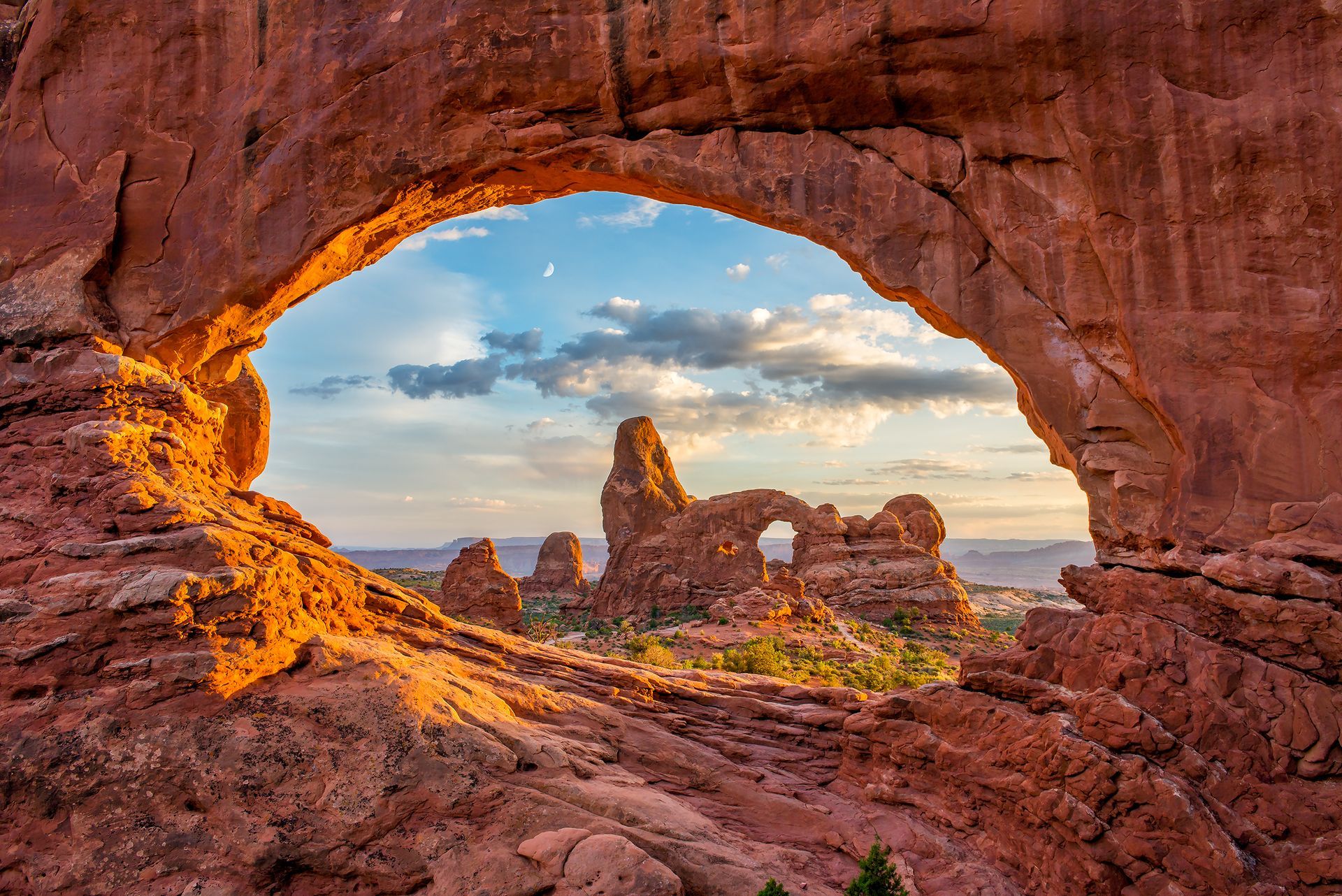
Arches National Park in Moab, Utah
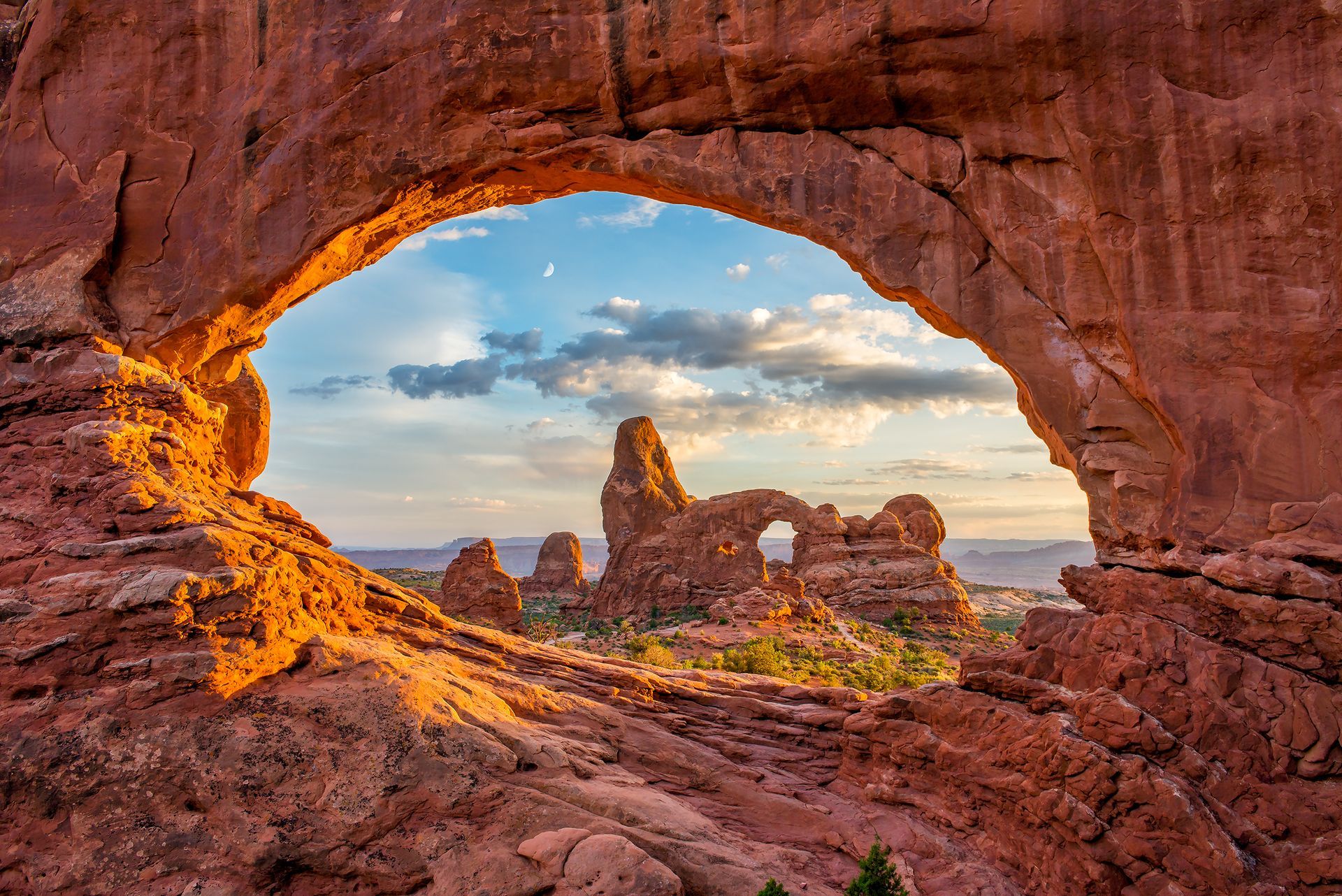
The Icon of the American Southwest: Arches National Park
Just five miles north of Moab, Utah,
Arches National Park protects over 2,000 natural sandstone arches, the highest concentration on Earth. This red rock wonderland reveals the artistry of time and erosion, sculpting balanced rocks, fins, and soaring arches like
Delicate Arch and
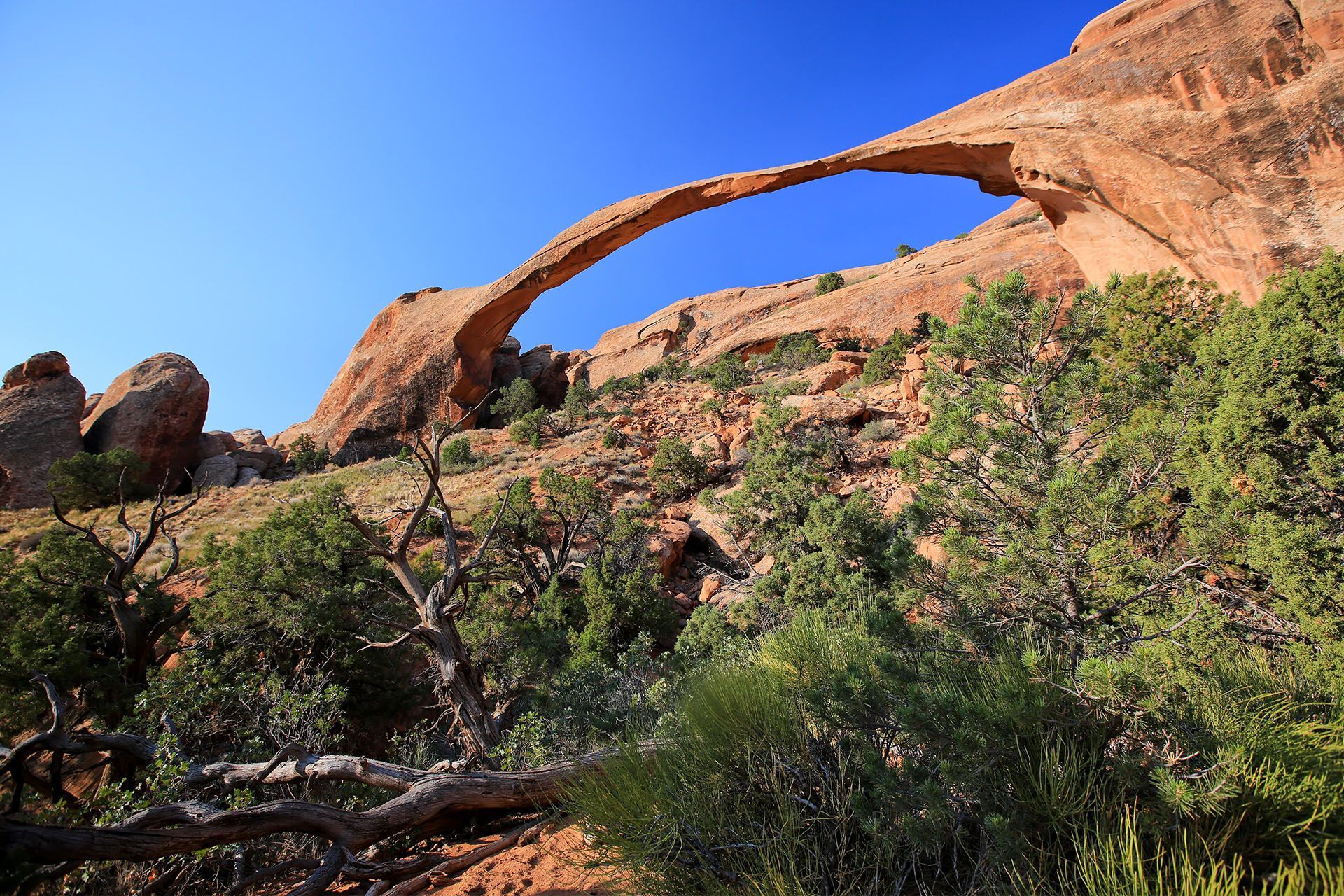
Landscape Arch. Visitors can explore the park on scenic drives or short hikes, making it one of the most breathtaking and accessible destinations in Utah’s canyon country.
GETTING TO ARCHES NATIONAL PARK
In just 5 minutes from downtown Moab, you'll reach the entrance to Arches. Once inside, the scenic drive through Arches spans about 18 miles one way. It's perfect for a morning outing or a full day of exploring.
Sit back and enjoy the views on an expertly-guided Arches National Park tour and make the most of every minute.
PARK HOURS & PASSES
- Open all year, 24 hours/day
- 7-day passes $30 per vehicle
Let's Explore Arches National Park!
- Tours in Arches National Park
- About Arches National Park
- Timed-Entry Tickets & Reservations
- Driving Through Arches National Park
- Best Time to Visit Arches
- Arches National Park Weather
- Camping in Arches National Park
- Lodging Near Arches
- Best Hikes in Arches
- Pictures of Arches National Park
- Facts about Arches
- How are Arches Formed
- Arches National Park Map
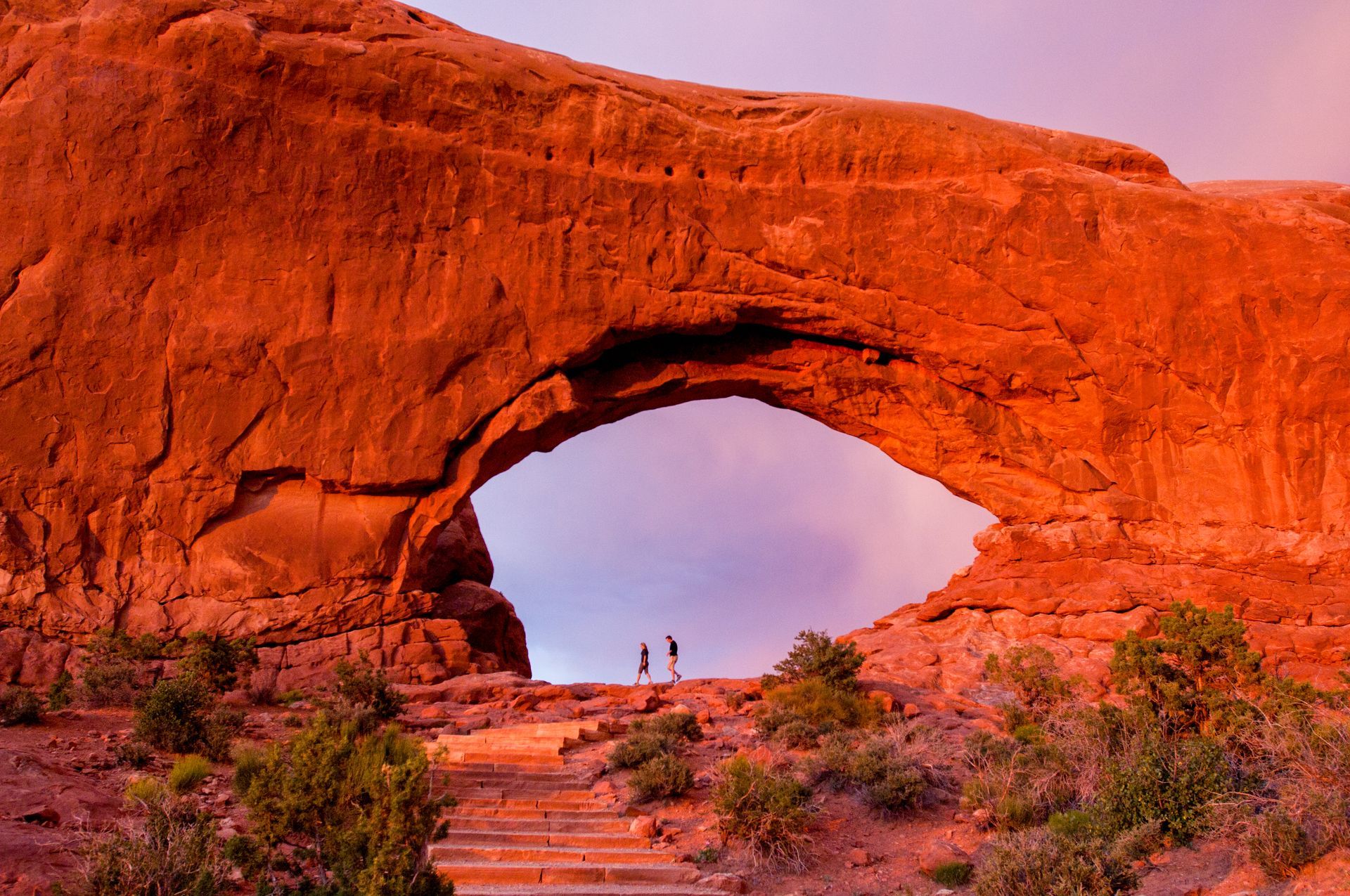
Tours in Arches National Park
Arches National Park is easy to explore on your own, but driving and parking can take time away from the experience. A guided tour lets you focus on the sights, not the stress. Expert guides know the best routes, parking spots, and photo-worthy stops, so you don’t miss a thing. Whether you’re seeing Arches for the first time or returning to soak it all in, a tour offers added insight and convenience. It’s the easiest way to see more, worry less, and experience the park like a local.
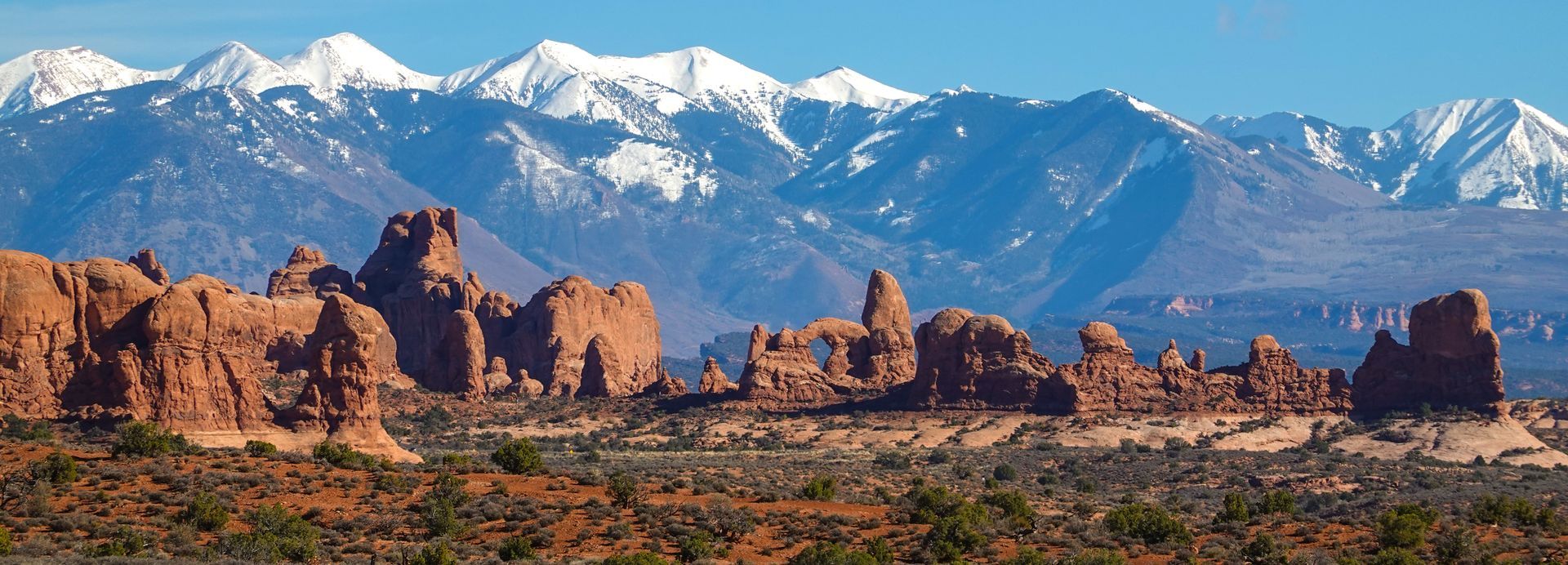
Timed Entry Reservations
TIMED ENTRY IS NO LONGER NEEDED FOR 2026
If you're driving into Arches, keep in mind that timed entry reservations are required from April through October between 7 AM and 4 PM. These passes can sell out months in advance, so early planning is key. You can still enter before 6 AM or after 5 PM without a reservation. Prefer to skip the stress? Guided van tours include park entry and bypass the reservation system entirely—no planning, no parking hassle, just the freedom to enjoy the park while someone else handles the logistics.
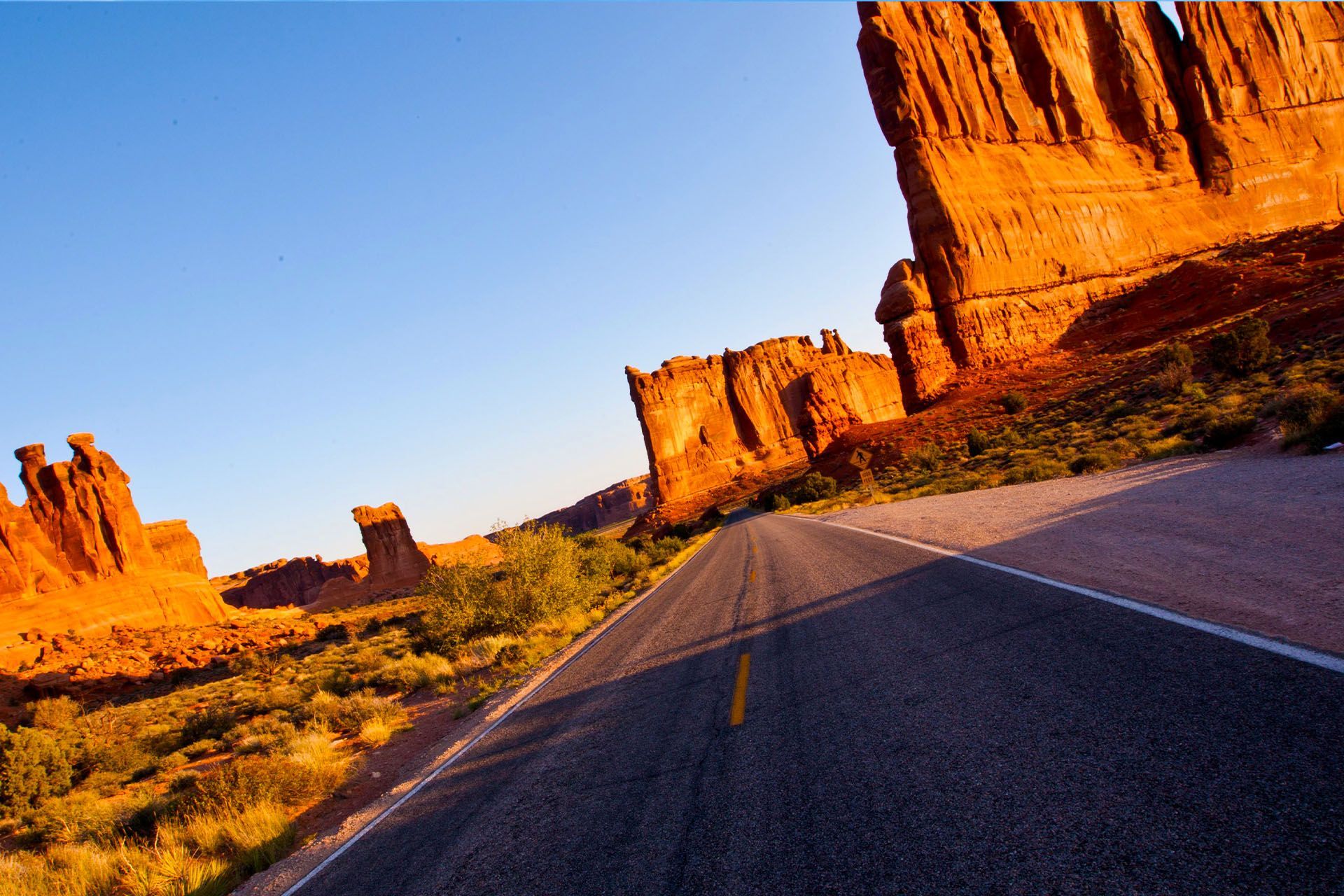
Driving Through Arches National Park in Your Own Vehicle
Exploring Arches National Park in your own vehicle gives you the freedom to access longer hikes like Delicate Arch and Landscape Arch. Just be sure to plan ahead, as parking can be limited, and crowds can slow you down. Want to avoid the logistics?
Guided tours include park entry, insider tips, and effortless access to many of Arches’ most iconic formations.
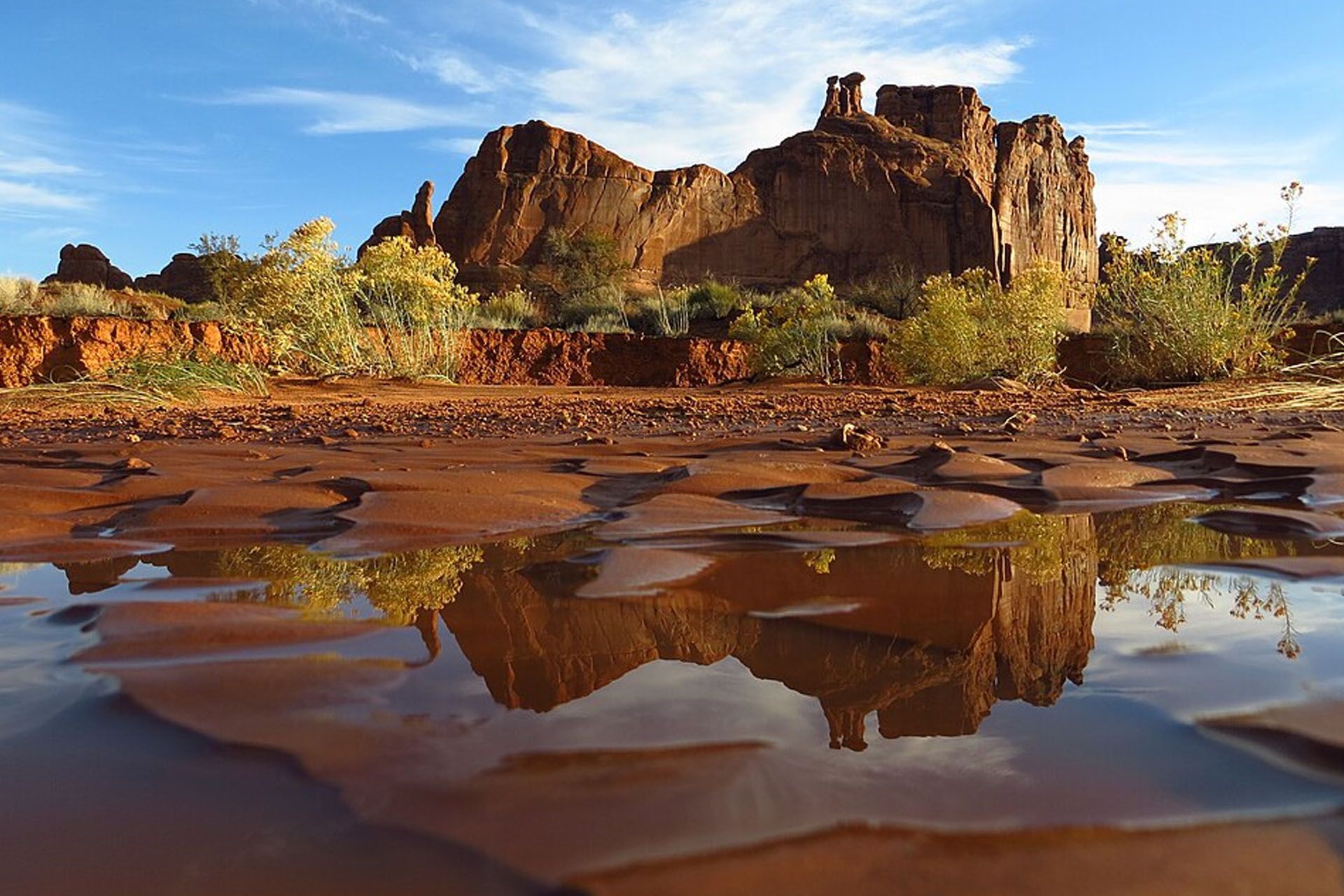
Best Times to Visit Arches
If you're planning to do longer hikes, spring and fall are the best times to visit Arches National Park, thanks to cooler temps, smaller crowds, and ideal hiking conditions. Summer can be hot, especially midday, but early mornings and evenings are beautiful, and days are long. Winter is the quietest season, with a chance to see snow on the red rock. If you're short on time or visiting during peak months, a guided tour can help you avoid parking stress and make the most of your time inside the park.
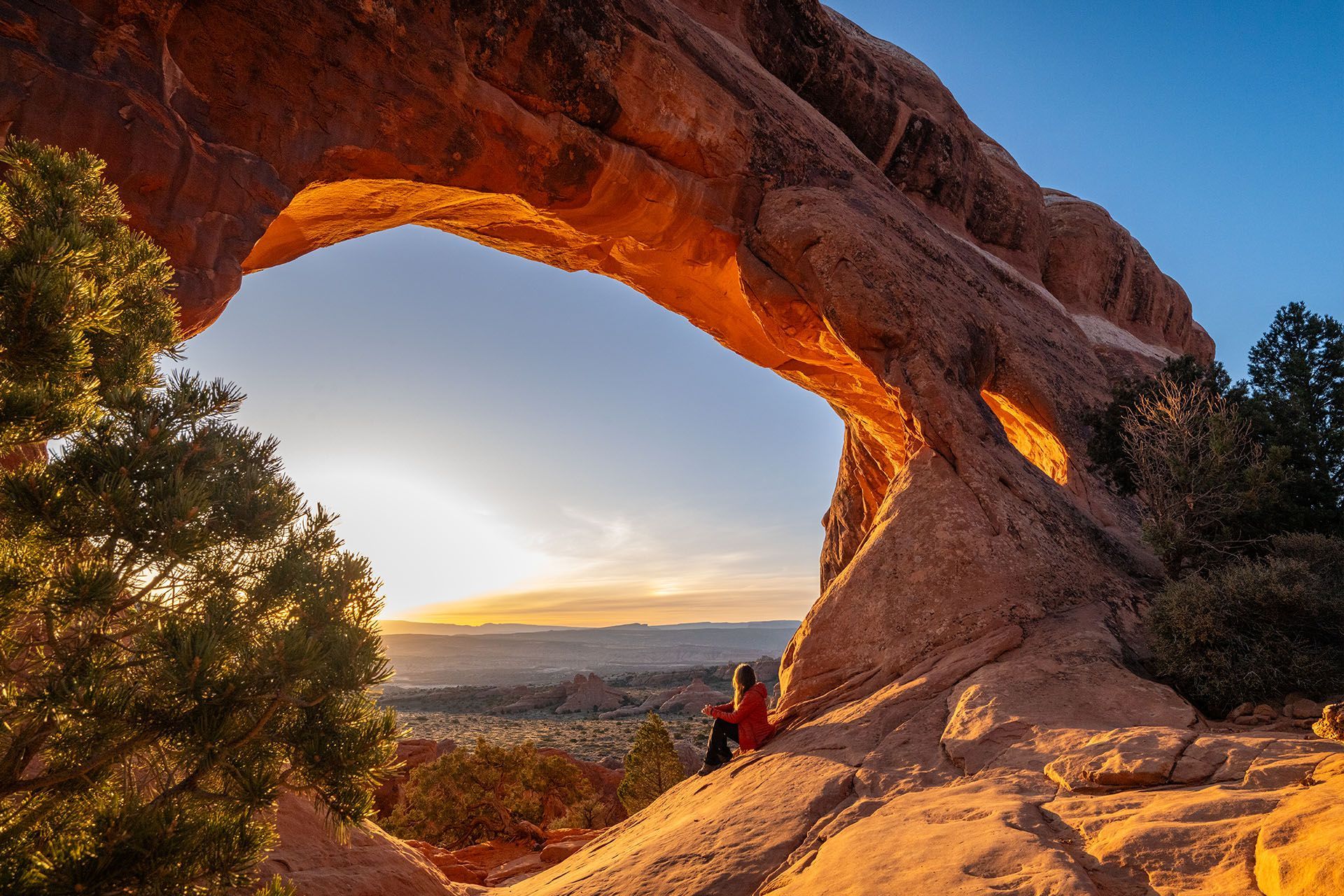
Arches National Park Weather
While Arches sits in the desert, don’t assume it’s scorching year-round. The park is located in Utah’s “high desert,” meaning temperatures can swing dramatically—even within a single day. Summer afternoons can be hot, but mornings and evenings are often comfortable. Spring and fall offer mild weather and cool nights, while winter brings crisp air and the occasional dusting of snow. No matter when you visit, dress in layers, stay hydrated, and be prepared for sun, wind, and sudden changes.
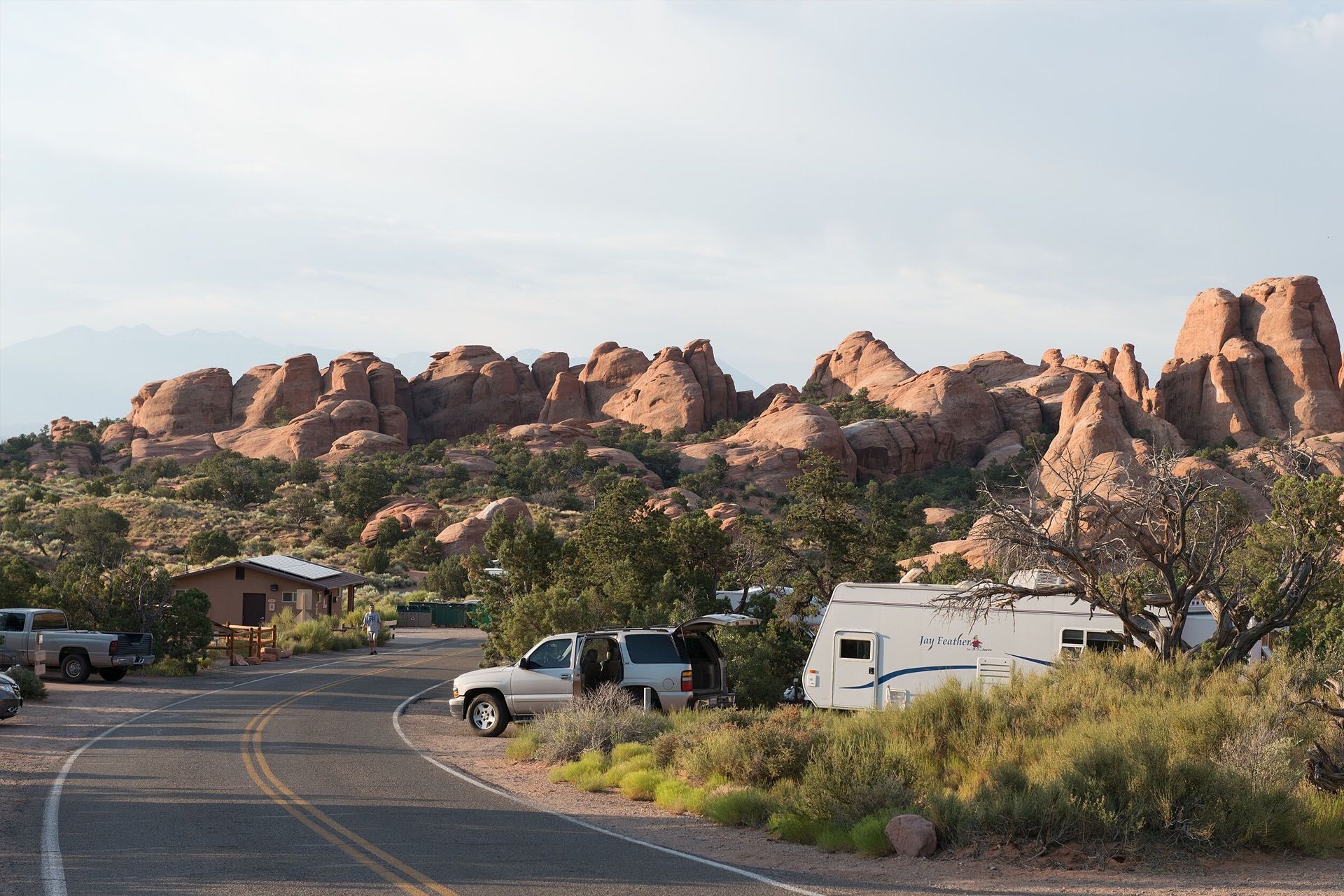
Arches National Park Camping
Camping in Arches National Park lets you slow down and soak it all in—especially after the crowds leave and the stars come out. The park’s main campground, Devils Garden, offers incredible views and access to nearby trails. Note that it's a 30-minute drive to town, though, as you're at the back of the park. There are other nearby campsites outside the park. Enjoy dinner by the fire and stargazing under one of the darkest skies in the Southwest. Reserve early and plan ahead. This is an experience you’ll want to linger in.
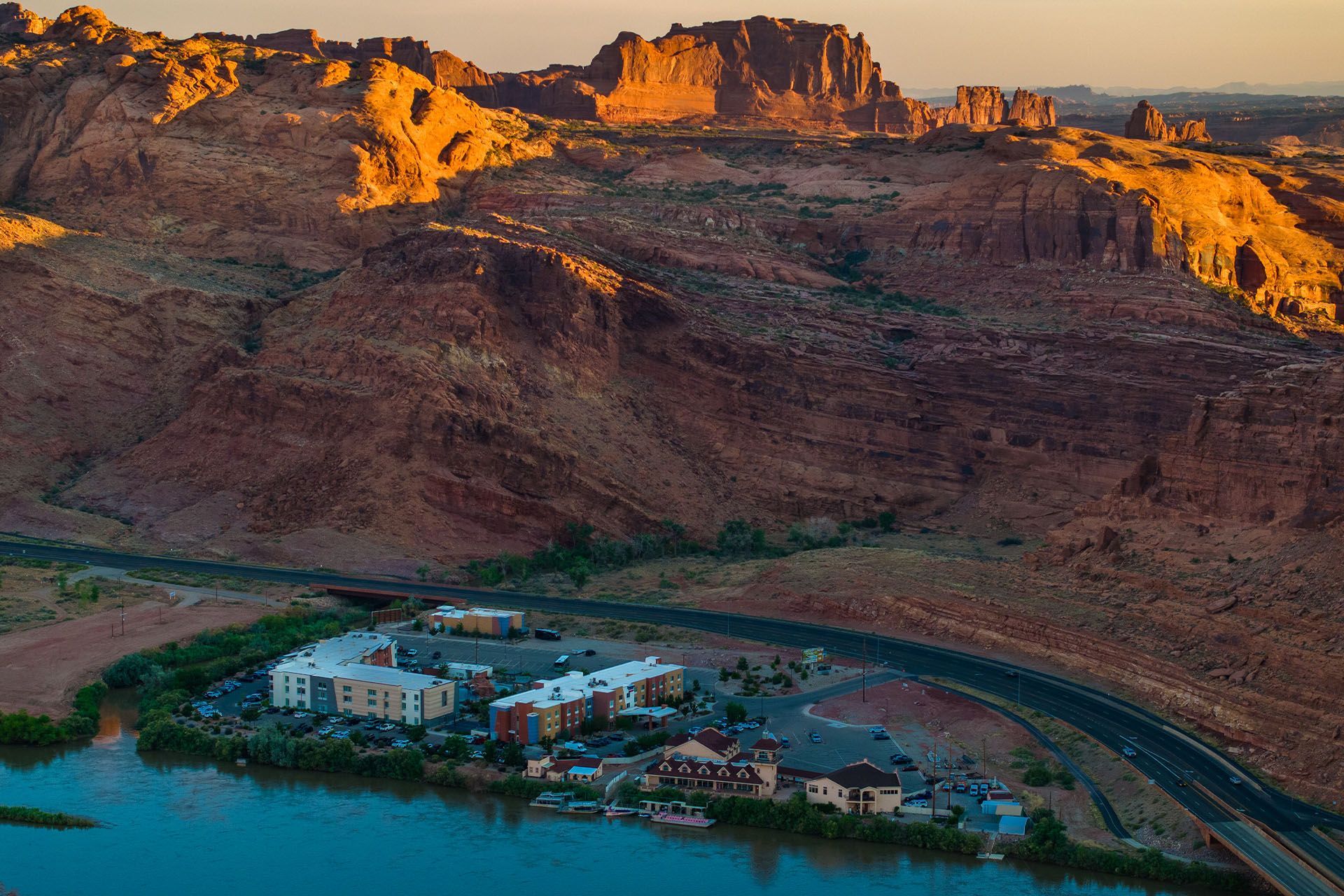
Best Lodging Near Arches
Arches National Park is just five minutes from downtown Moab, making it one of the easiest parks to pair with nearby lodging. Moab is packed with hotels, vacation rentals, cabins, and campgrounds to fit every style and budget. Whether you’re looking for riverside views, upscale resorts, family-friendly space, or even glamping, you’ll find it close to the park entrance. Lodging fills quickly in Moab, so be sure to book early and give yourself more time to explore and less time stressing about where to stay.
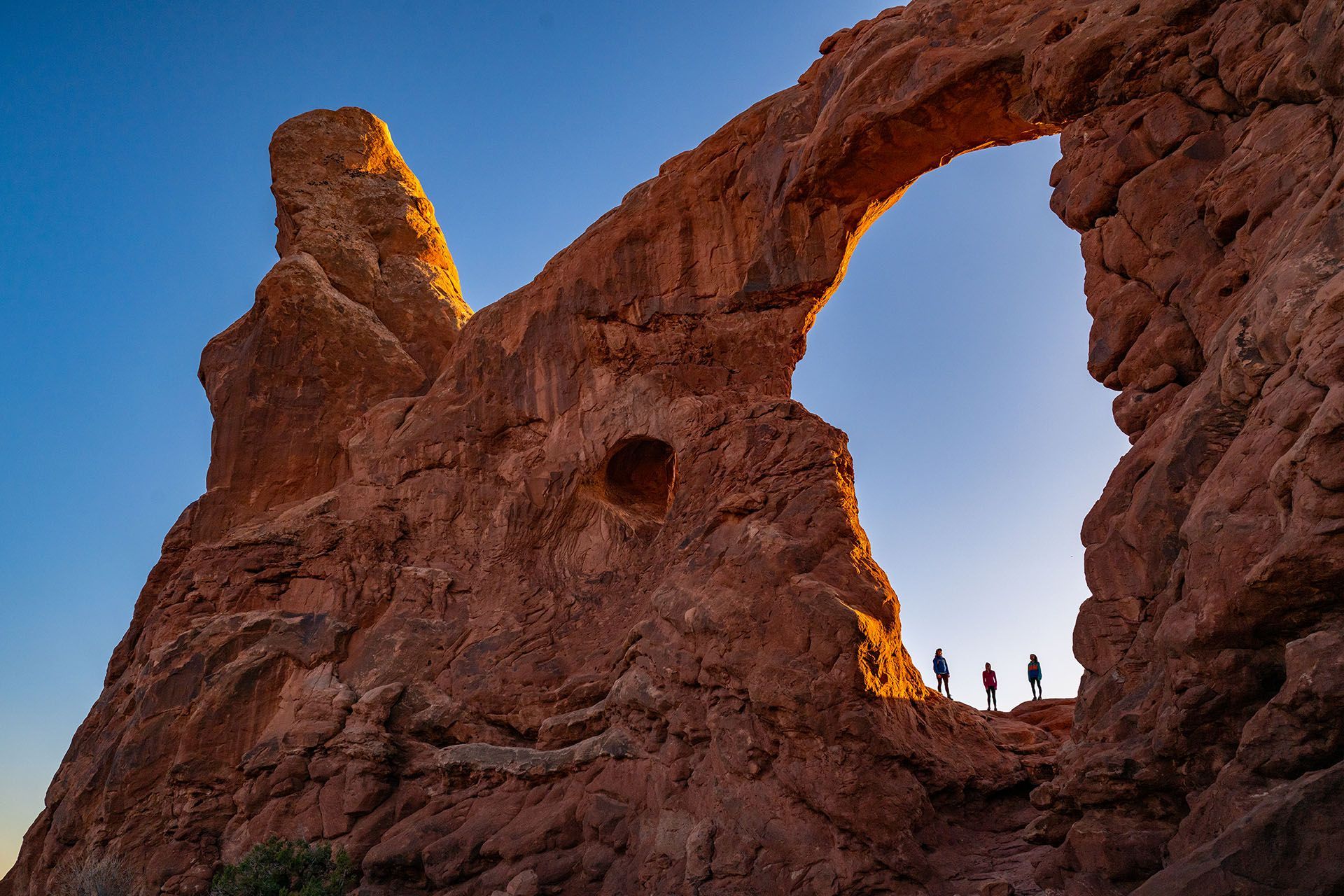
Best Hikes in Arches
There’s no such thing as a bad hike in Arches, but some are truly unforgettable. Whether you're chasing sunrise at Delicate Arch, strolling the Windows Section, or hiking beneath the sweeping span of Landscape Arch, there's something here for every ability and energy level. We've put together a list of our favorite trails—some short, some challenging, all spectacular. So if you’re wondering where to start, or just want to make the most of your time in the park, these are the hikes we’d recommend again and again.
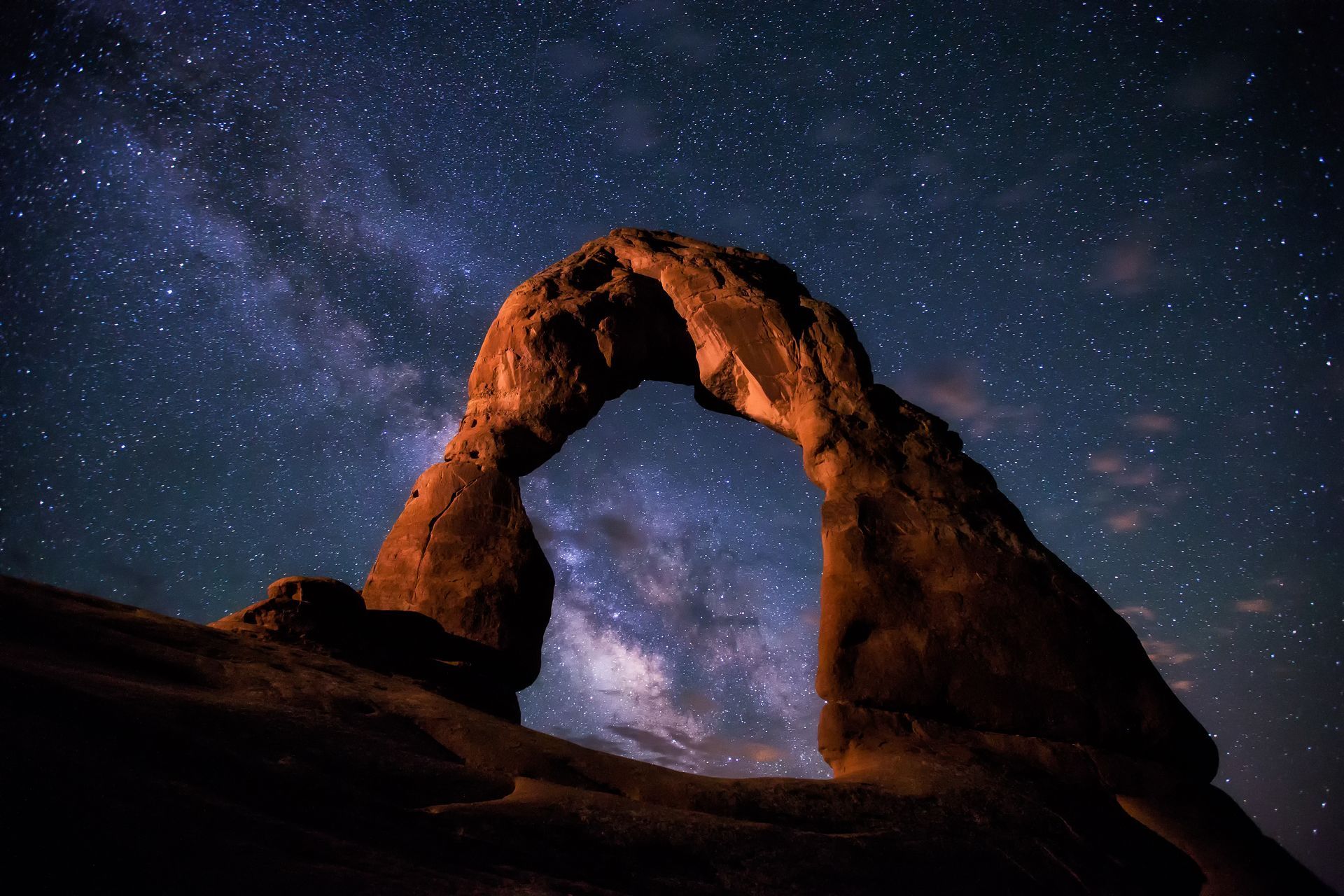
Pictures of Arches National Park
Arches National Park is regarded as one of the most picturesque geological wonders in the United States. You've probably seen the photos of these towering formations and gasped. From golden sunrise glows to star-filled desert nights, the scenery here is nothing short of cinematic. If you’re still uncertain, take a look at a few more of these natural stone arches to get inspired, start dreaming, and prepare for one of the most photogenic landscapes in the Southwest.
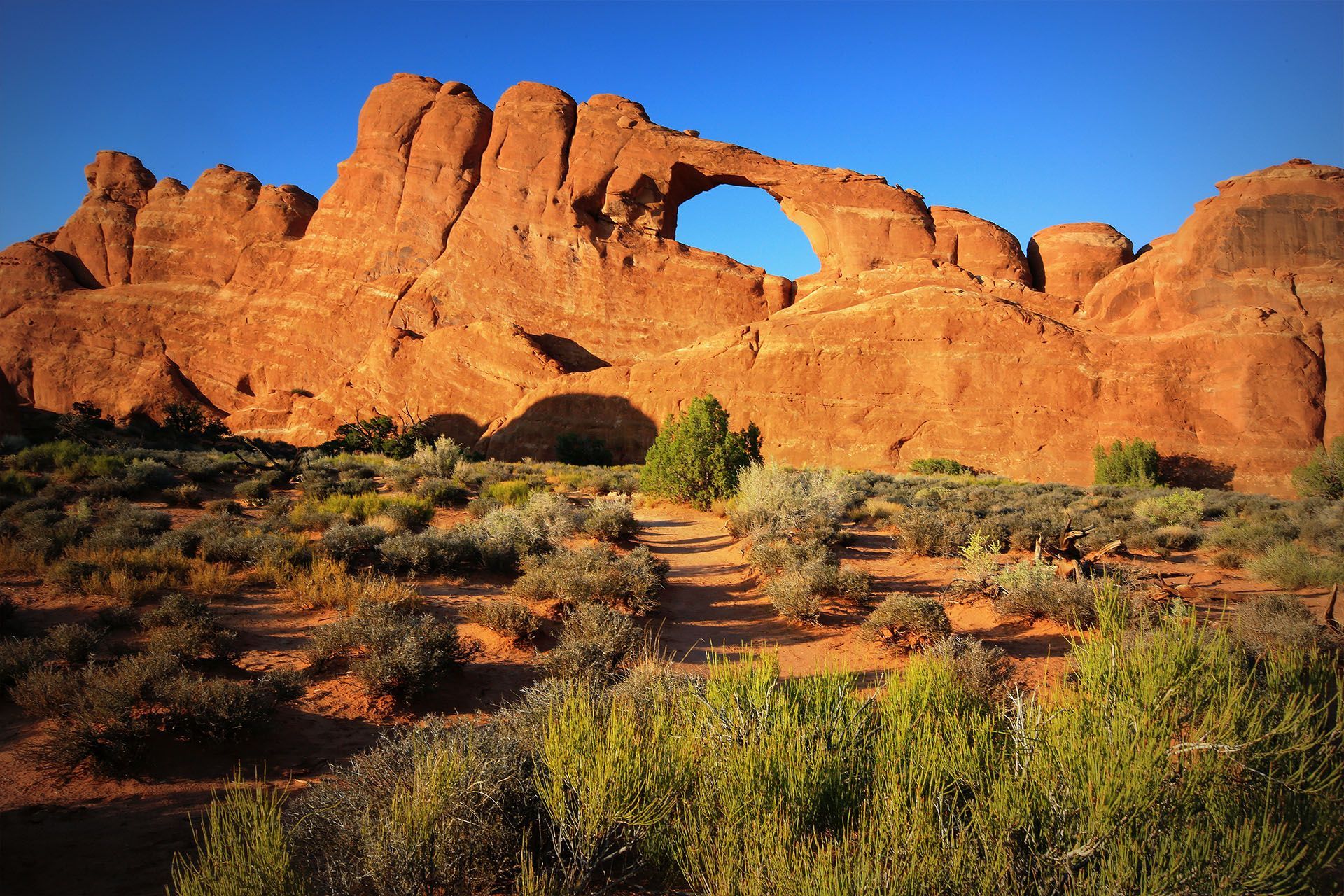
Best Arches to See
Arches, upon arches, upon arches—it’s what makes this park so iconic. Beyond the internationally recognized Delicate Arch, you’ll find hidden gems formed over millions of years through wind, water, and time. From towering spans to narrow windows, each formation tells a story in stone. And when the sun sets? The arches become silhouettes against a starlit sky, thanks to Moab’s clear desert air and minimal light pollution. It’s beautiful by day, and even more magic after dark.
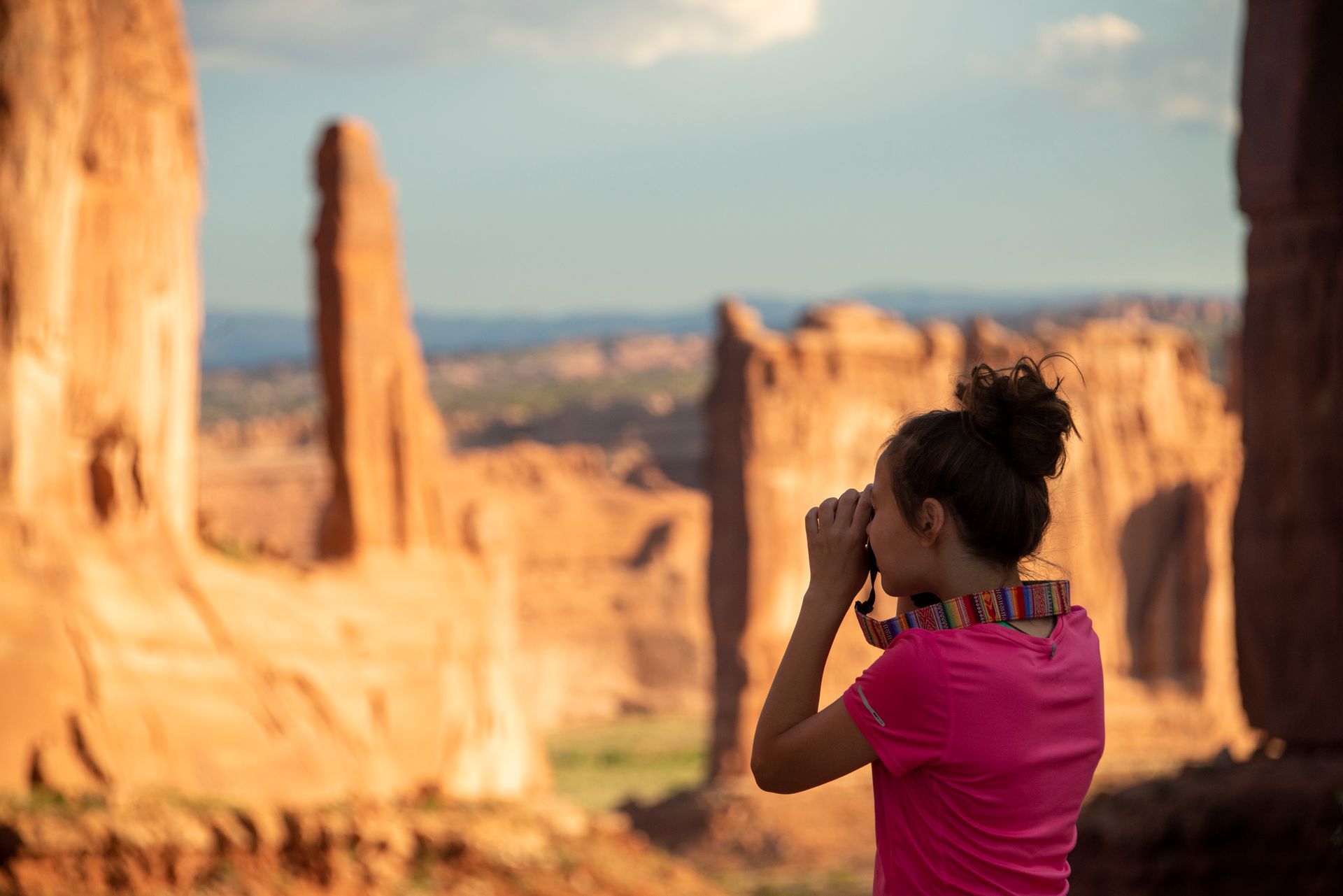
Fun Facts about the Park
We’ve pulled together a list of fun, surprising, and genuinely useful facts about Arches National Park. Want to know how many arches exist? Which ones have collapsed? How long they take to form, or how to tell an arch from a window? Whether you're planning your first visit or returning with fresh curiosity, our fact list may answer your questions, and even a few you didn’t know you had.
How are Arches Formed?
Ever wonder how more than 2,000 arches ended up in one place? It didn’t happen overnight. These massive stone spans weren’t carved by hand, but by time, wind, water, and a little underground drama. From sandstone fins to natural windows, the story of how arches form is just as fascinating as the formations themselves. If you’re curious about the slow-motion process that shaped one of the world’s most iconic landscapes, we’ve got the full breakdown waiting for you.
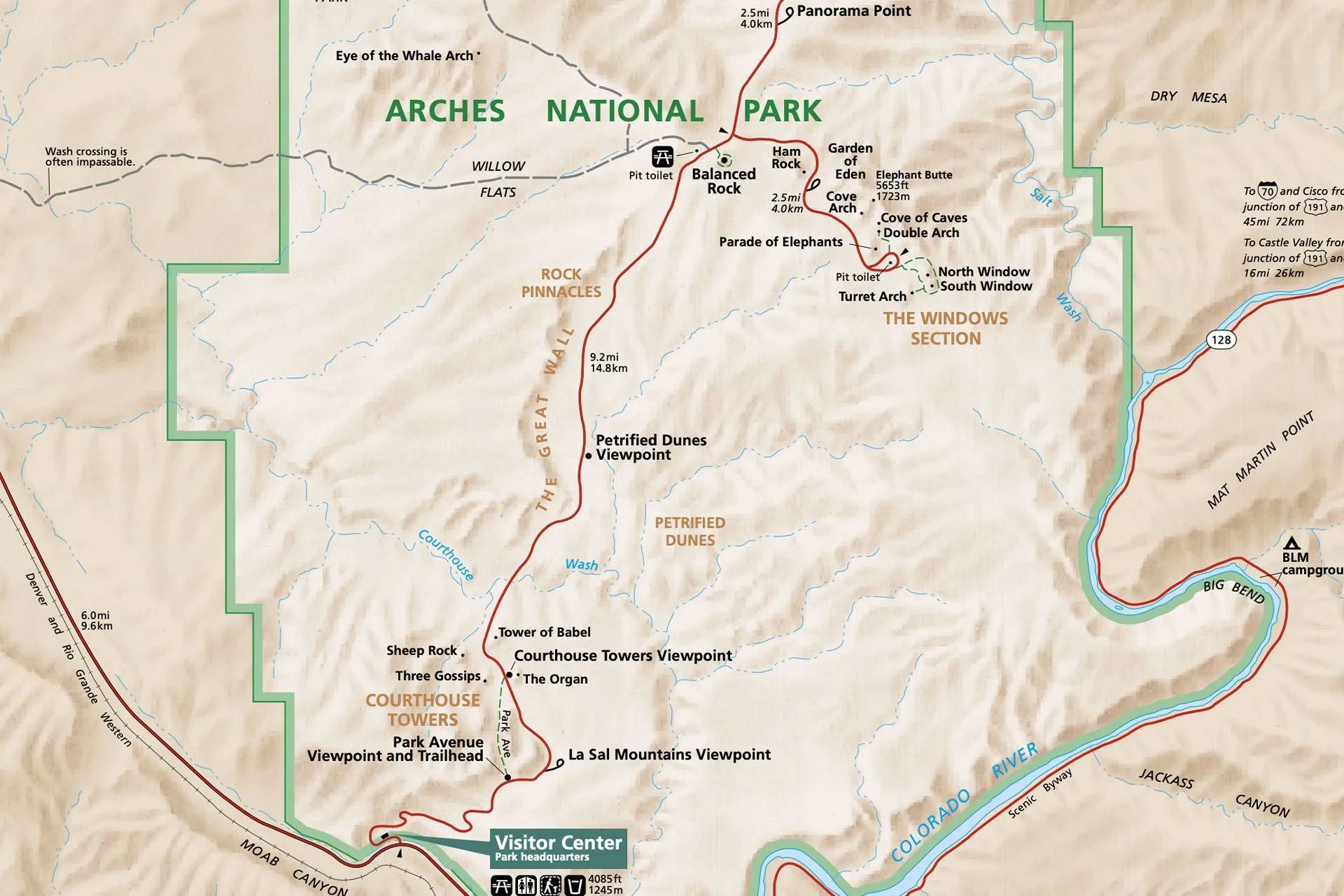
Arches National Park Map
With so many trails, arches, and photo stops packed into Arches National Park, having a map is more than helpful. It’s essential. It’s the best way to get a sense of where the major highlights are, how far they are from one another, and what lesser-known spots might be worth adding to your list. Whether you’re planning to hike, drive, or take a guided tour, having a visual reference makes it easier to build an itinerary that fits your timing and interests, so you spend more time exploring and less time figuring things out.
Exploring Arches National Park
Exploring Arches National Park is like stepping into another world—a place where time, wind, and stone have sculpted the Earth into something dreamlike. With over 2,000 natural arches, towering fins, and gravity-defying rock formations, the park offers a landscape that feels both ancient and alive, inspiring awe at every turn.
Whether you're hiking to Delicate Arch, standing beneath the massive spans of the Windows Section, or simply gazing out the window as the sun sets over Balanced Rock, Arches invites you to pause, breathe, and take it all in. The light changes by the hour, the shadows shift, and no two visits feel exactly the same.
Planning ahead means you’ll make the most of every moment here. Whether you choose to explore on your own or
let a guide lead the way, Arches is more than a park—it’s a memory you’ll carry long after the red dust fades from your shoes.
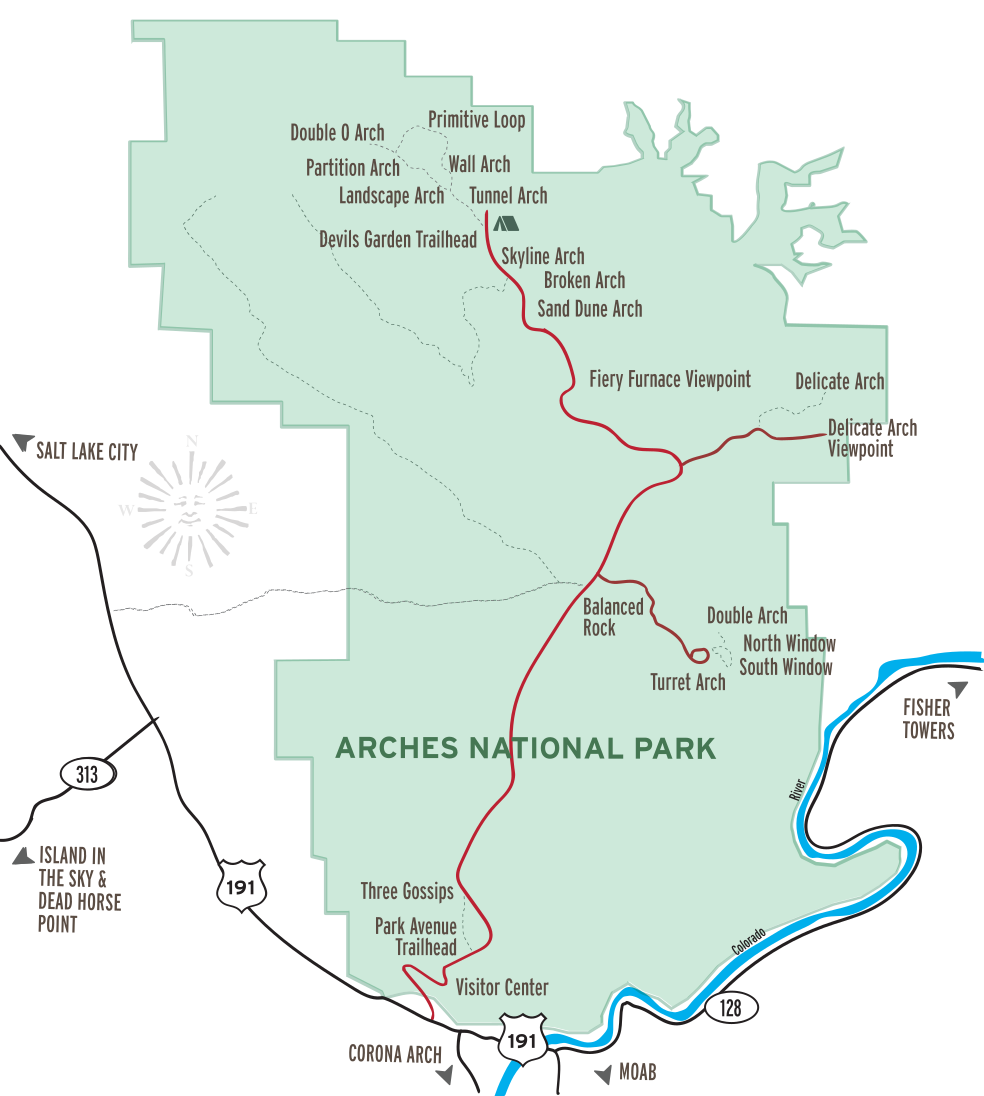

Most Popular Tours in Arches National Park
Anyone can drive through Arches, but only with a guide does the park truly come alive. Our expert naturalists and storytellers reveal the hidden arches you might otherwise pass by, share the geology and history written in every cliff face, and take you to the best photo spots at just the right time of day. You won’t worry about parking, navigation, or missing the highlights—you’ll simply relax and experience the park in comfort while gaining a deeper connection to its wonders. A guided tour turns Arches from a sightseeing stop into a memory you’ll carry for a lifetime.
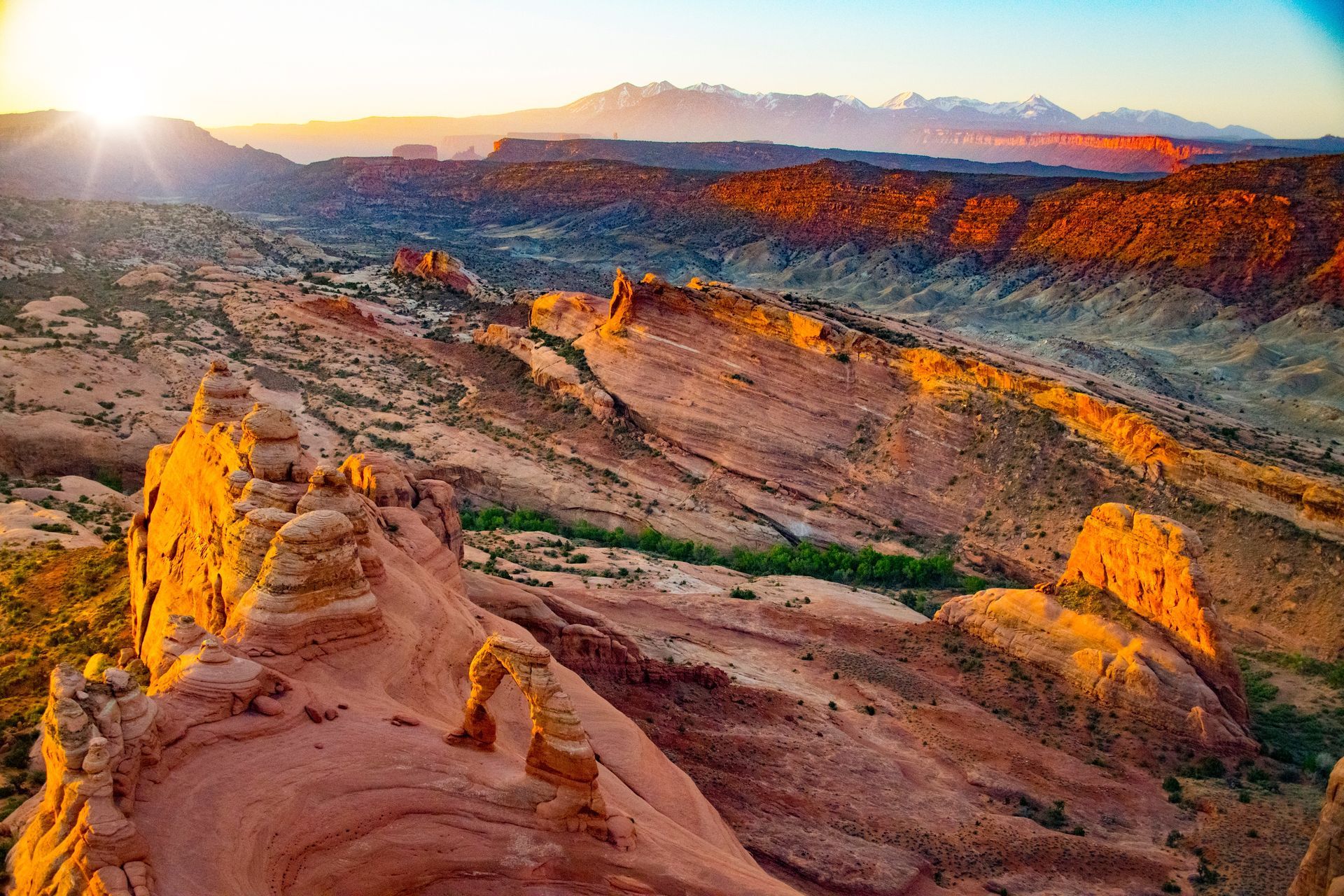
Soar above Arches in a scenic flight that reveals its hidden formations, sweeping vistas, and jaw-dropping beauty, all without the heat, crowds, or hiking.
- Duration: ~30 minutes
- Departures: 9am to 2pm
- Season: Year Round
ADULTS 13+
$228
YOUTH 3-12
$228
Witness Arches at its most magical: Golden hour light, fewer crowds, and fascinating stories shared by guides who bring the landscape to life.
- Duration: ~4.5 hrs
- Departures: Evening
- Season: Year Round
ADULTS 13+
$135
YOUTH 5-12
$115
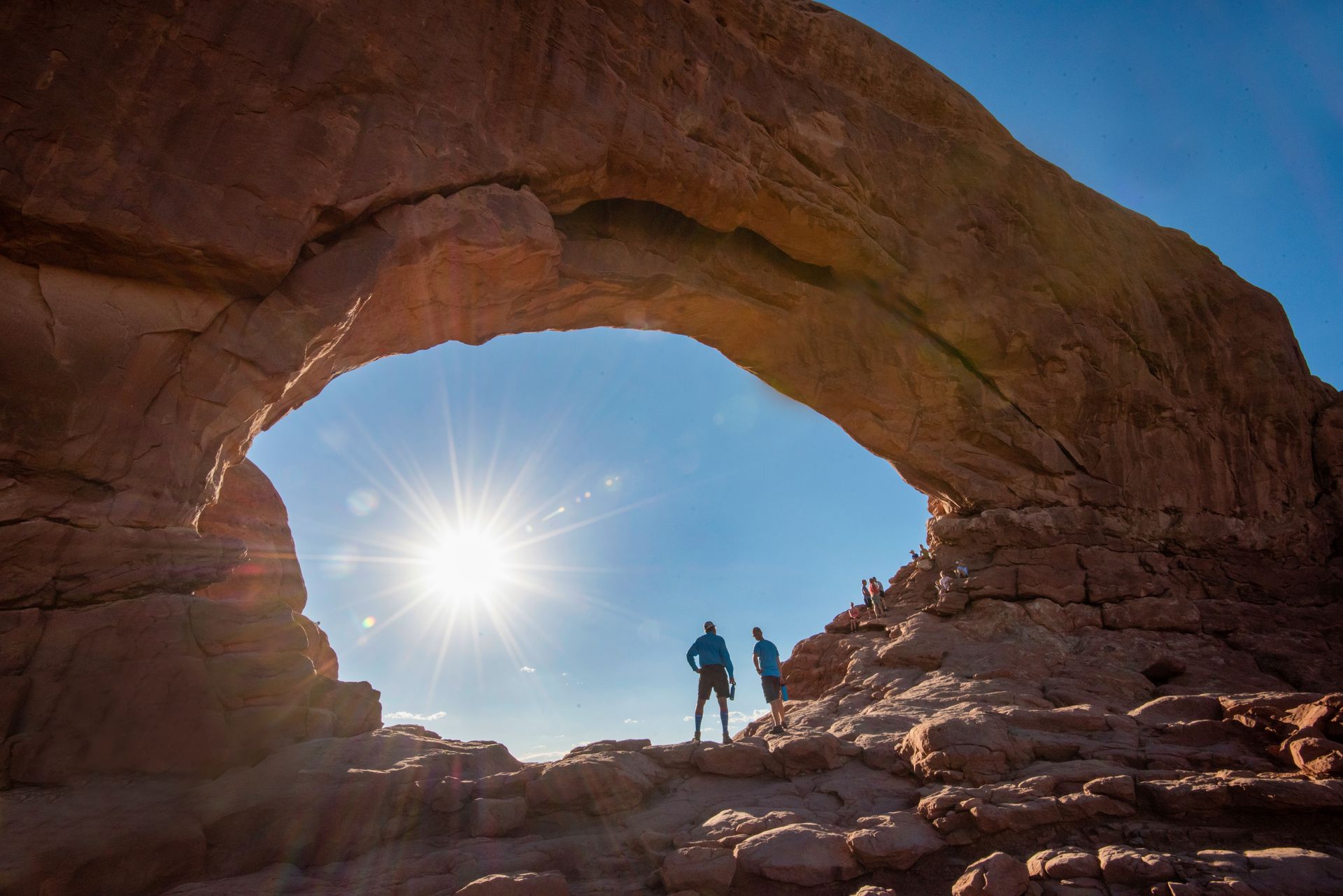
VIP access to Arches National Park: Expert guides, iconic sights, & mantle-worthy family photos without the hassle of parking or missing key sights.
- Duration: ~4 hrs
- Departures: Morning
- Season: Year Round
ADULTS 13+
$125
YOUTH 5-12
$105
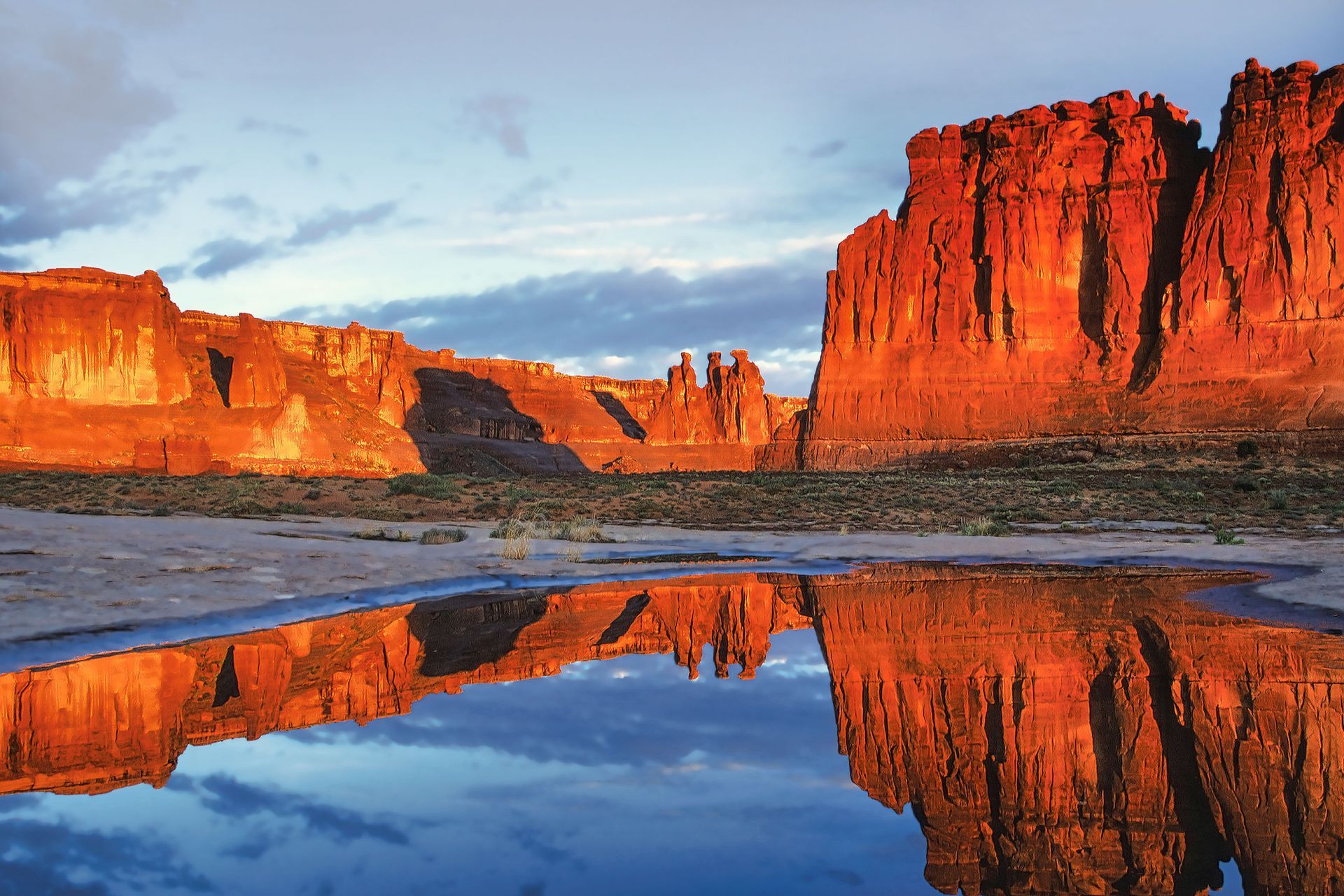
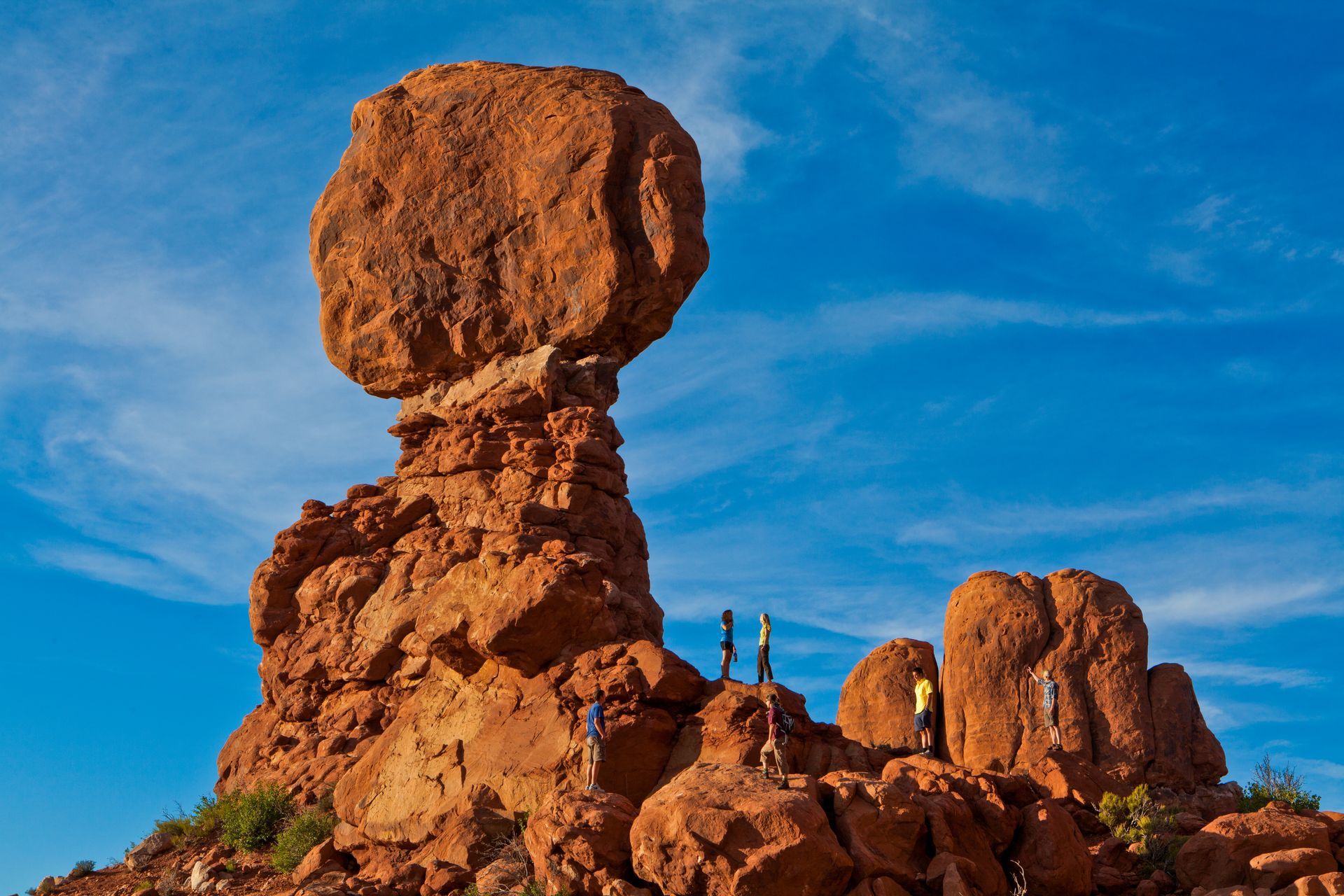
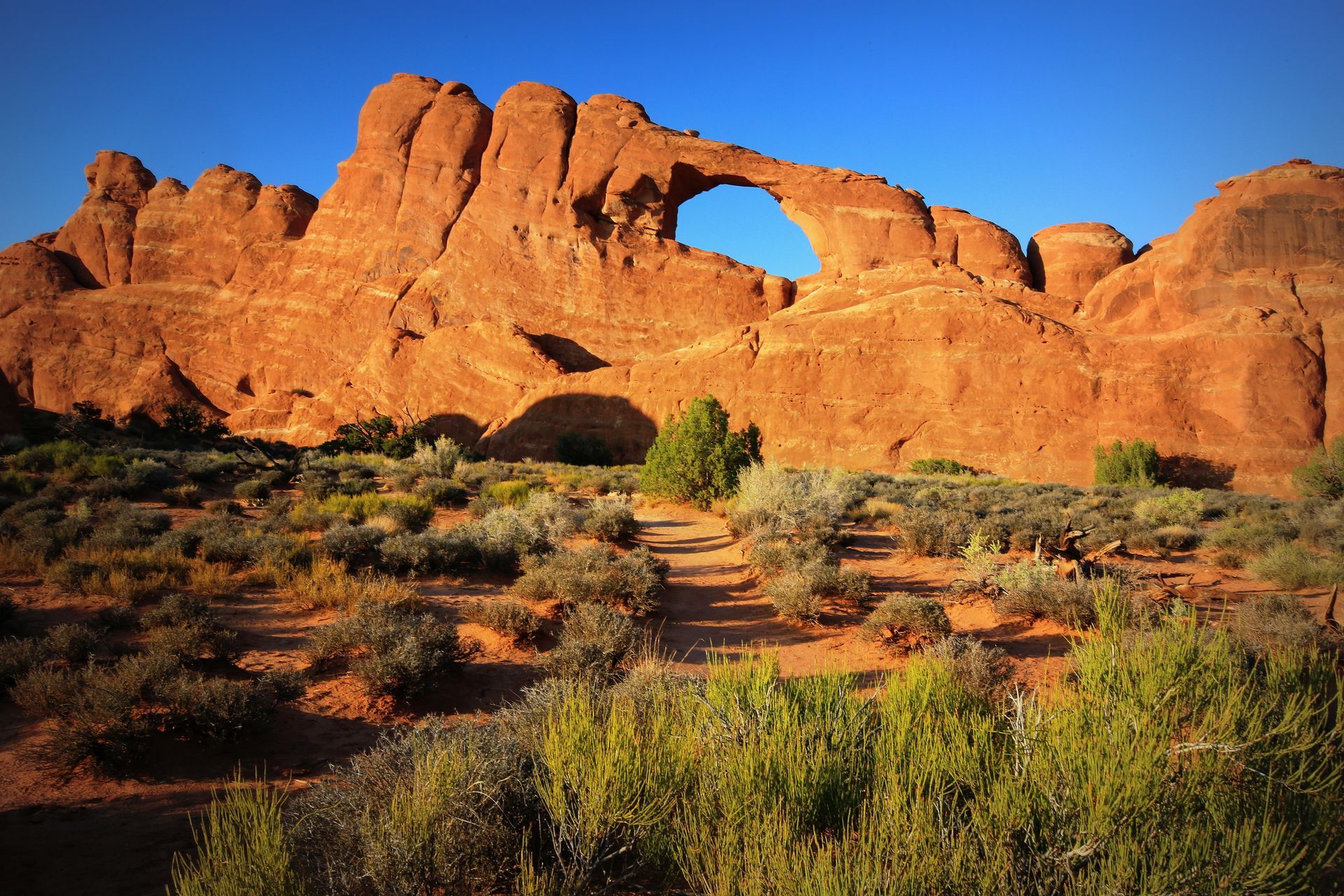
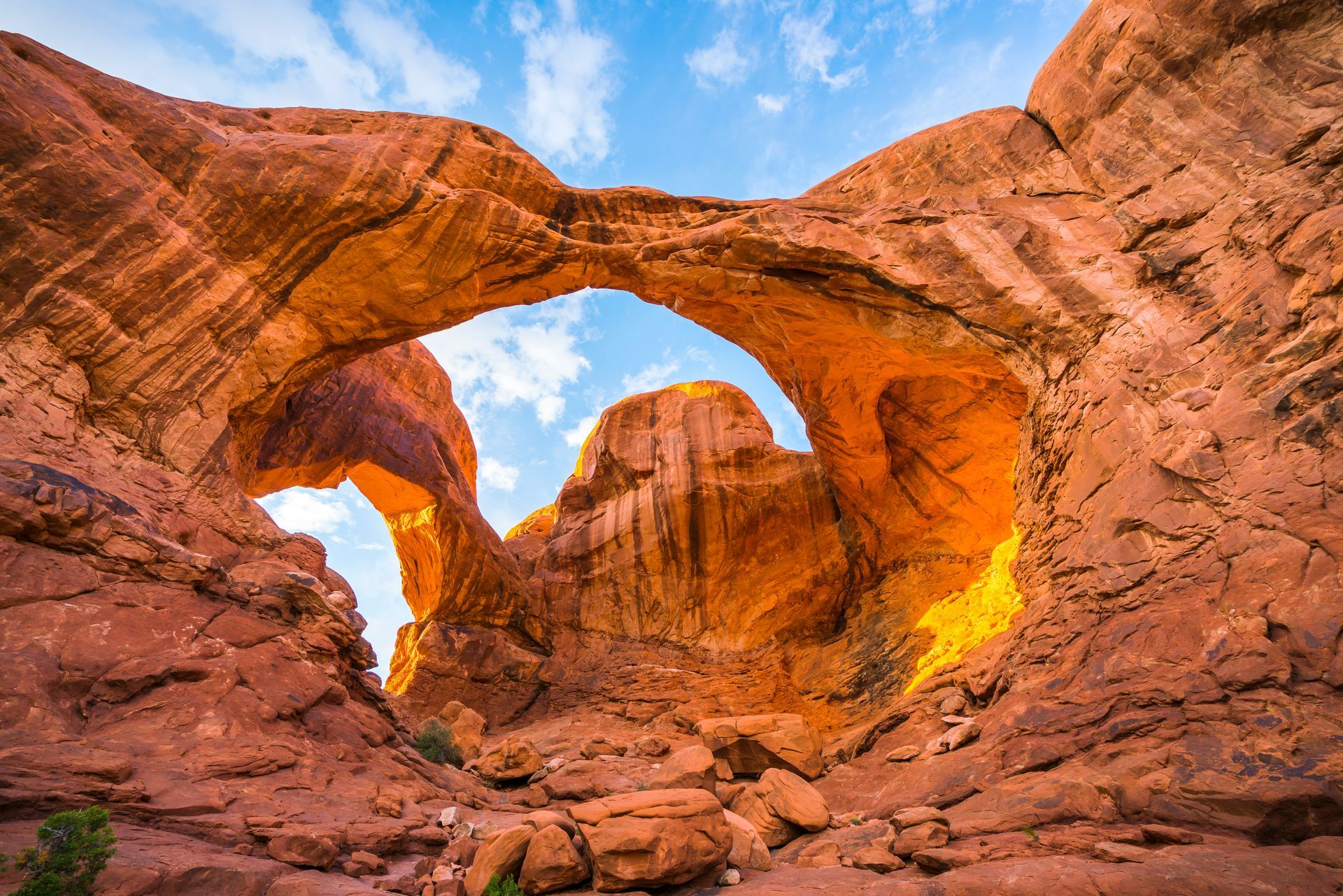
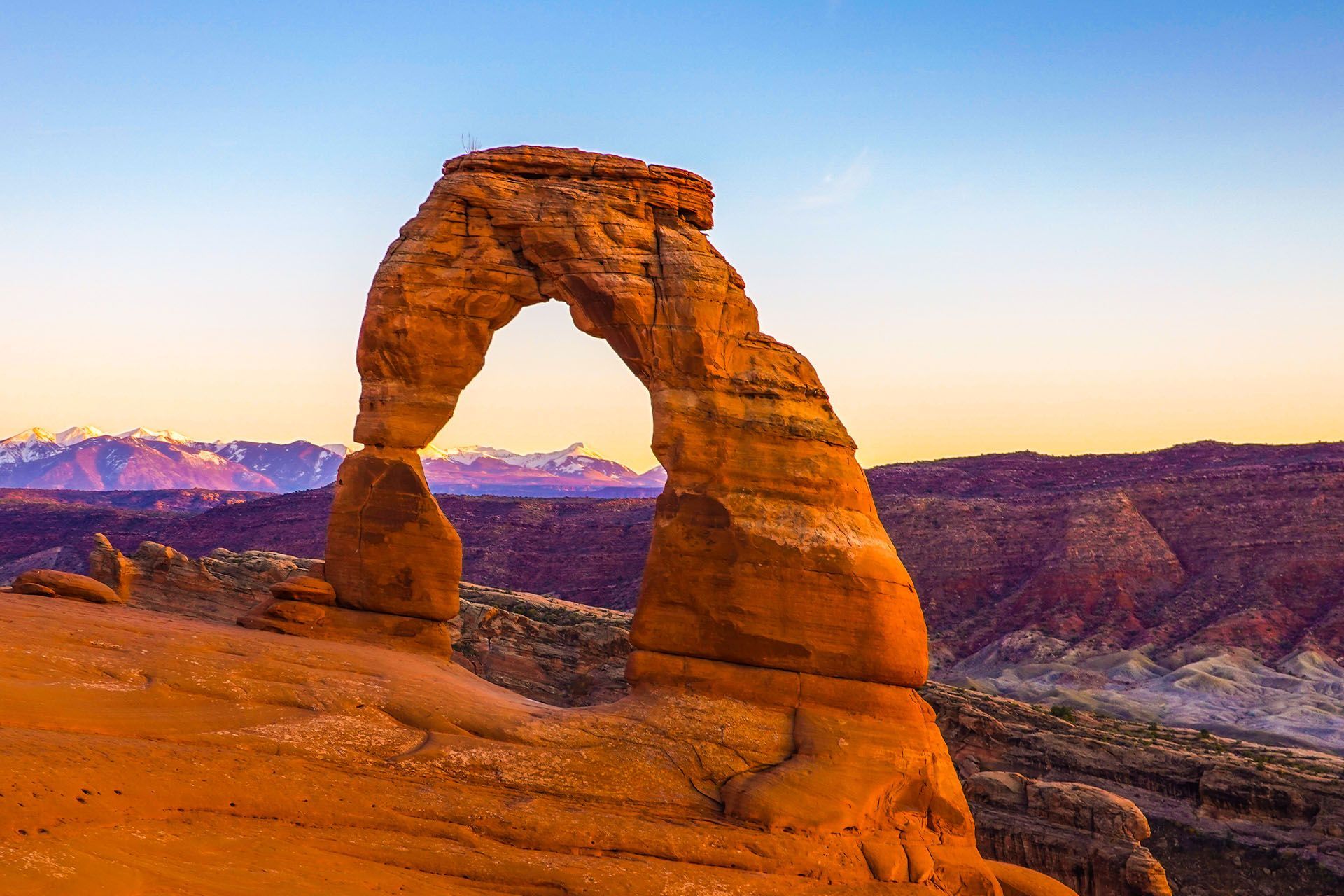

Over 2,000 Natural Sandstone Arches - and Counting!
Arches National Park holds the highest concentration of natural stone arches in the world—more than 2,000, 43 of which have collapsed since 1977. Formed over millions of years by time, erosion, and geologic uplift, these incredible formations include the world-famous Delicate Arch, the expansive Landscape Arch, and many that feel like hidden secrets between the fins.
Long before it became a national park, this landscape captivated author and wilderness advocate Edward Abbey, who worked here as a backcountry ranger in the 1960s. His iconic book Desert Solitaire shares a personal, conflicted view of preserving the beauty of Arches while welcoming others to see it. We’re lucky he chose to share it—and even luckier we still get to.
Did You Know?
- There are 2,000+ documented arches in the park—some span over 300 feet.
- 43 arches have collapsed since 1977. Nature is still at work.
- Landscape Arch is longer than a football field—and just 6 feet thick in places.
- Delicate Arch got its name by accident—it was mislabeled on a 1934 geologic map.
- New arches may form—or collapse—in our own lifetime.
Then vs Now: From Abbey to Instagram
“Wilderness is not a luxury but a necessity of the human spirit.” — Edward Abbey, Desert Solitaire (1968)
When Abbey roamed Arches, only a few thousand people visited each year. There were no shuttles, no gates, no crowd control—just sandstone, silence, and stars. Today, timed entry and trail signs help preserve what’s still wild. But that feeling you get when the rock glows at sunset? That’s timeless.
See it While it Still Stands
Not all arches last forever. Some collapse after centuries. Others in a moment. Wall Arch fell in 2008—no one saw it happen, but the rubble remains. That’s part of what makes visiting Arches so powerful: you’re witnessing a fragile, beautiful moment in geologic time.
Frequently Asked Questions
WHERE IS ARCHES NATIONAL PARK LOCATED?
Arches National Park is in southeastern Utah, just 5 miles north of downtown Moab. It’s part of the Colorado Plateau and bordered by the Colorado River, with Canyonlands National Park and Dead Horse Point State Park nearby.
WHAT IS ARCHES PARK KNOWN FOR?
Arches is world-famous for its natural sandstone arches—over 2,000 of them. It’s home to iconic formations like Delicate Arch, Landscape Arch, Balanced Rock, and the Windows Section, all sculpted by millions of years of erosion and weathering.
HOW ARE ARCHES FORMED?
Natural arches are formed over millions of years as sandstone fins crack and erode. Water, ice, and wind gradually wear away the rock, creating windows that eventually become full arches. Arches are still forming—and collapsing—today.
WHAT IS THE BEST MONTH TO VISIT ARCHES NATIONAL PARK?
April to May and September to October are ideal if you plan to do some longer hikes. Spring and fall bring cooler temperatures and great lighting for photography.
Summer can be hot, but mornings and evenings are spectacular. With longer days, you can see more and do more. Plan for shorter visits to sites if visiting midday.
Winter is quieter and can sometimes offer unique snowy desert views.
HOW MUCH TIME DO I NEED TO VISIT ARCHES NATIONAL PARK?
A half day is enough to see the major highlights. A full day allows time for longer hikes like Delicate Arch or Devil’s Garden. If you’re short on time, a 4-hour guided tour can show you more with less stress.
CAN I DRIVE THROUGH ARCHES ON MY OWN?
Yes. The park has an 18-mile scenic drive with pullouts for iconic viewpoints and short hikes. But during peak months, parking and entry can be a challenge. Guided tours include park entry and let you skip the driving and planning.
IS ARCHES NATIONAL PARK OPEN YEAR ROUND?
Yes! Arches is open 24/7, 365 days a year. However, from April through October, timed entry reservations are required between 7am and 4pm unless you’re on a guided tour.
DO I NEED A RESERVATION TO ENTER ARCHES NATIONAL PARK?
From early April to late October, yes—you’ll need a timed entry reservation if driving yourself during the day. You can enter before 7am or after 4pm without one. If you book a guided tour, your entry is included and no reservation is needed.
HOW MUCH DOES IT COST TO ENTER ARCHES NATIONAL PARK?
A 7-day private vehicle pass is $30. Motorcycle passes are $25, and individuals (on foot or bike) are $15. Entry is included in most guided tours.
WHAT'S THE EASIEST WAY TO EXPLORE ARCHES NATIONAL PARK?
If you want to relax and focus on the views, a guided tour is the easiest way. You’ll avoid timed entry stress, skip the parking hunt, and enjoy stories and insights from a local expert—all without driving.
Not finding what you're looking for?
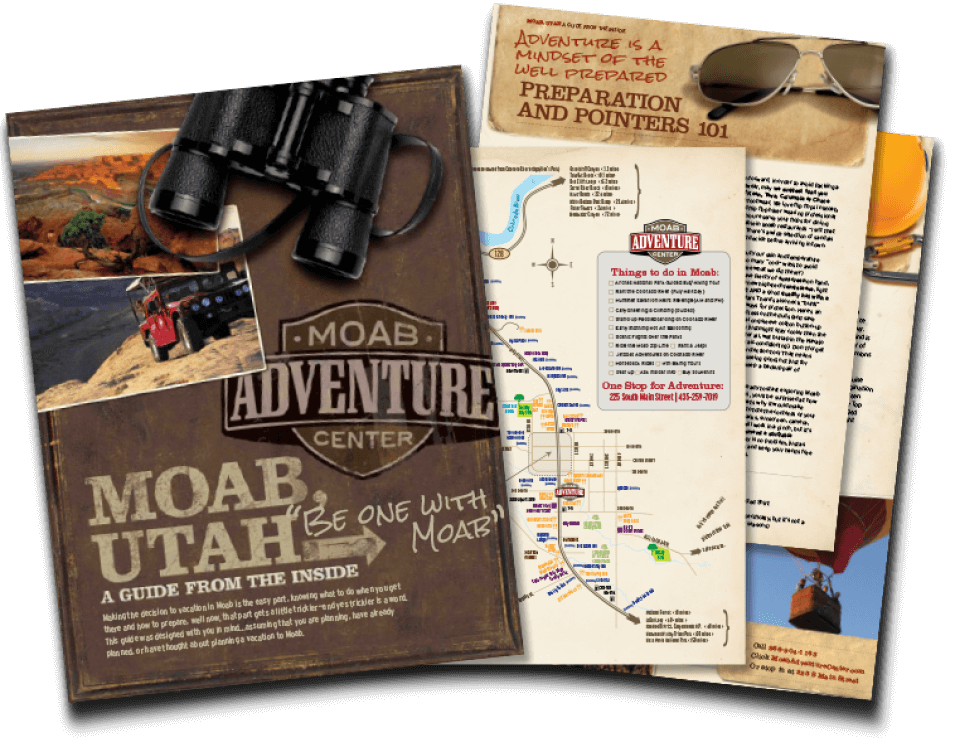
GET THE FREE MOAB INSIDER'S GUIDE!
Join our Moab Insider Email Series
and get our free Moab Insider's Guide
. It's your shortcut to where to stay, can't-miss adventures, recommended restaurants, hidden gems, and how to make the most of Arches & Canyonlands. Real local tips, easy itineraries, and expert advice so you can plan less and experience more
.
BECOME A MOAB INSIDER
With our Moab Insider's Gide and email series, you'll get local tips on the best dishes at restaurants, hidden adventures that most people miss, tips on when to visit, and a few more secrets on the side. Get all the essentials for the perfect Moab experience.
Free. Instant download. Unsubscribe anytime.
⭐️⭐️⭐️⭐️⭐️ 7,000+ 5-Star Reviews | 22-Time Best of State Winner