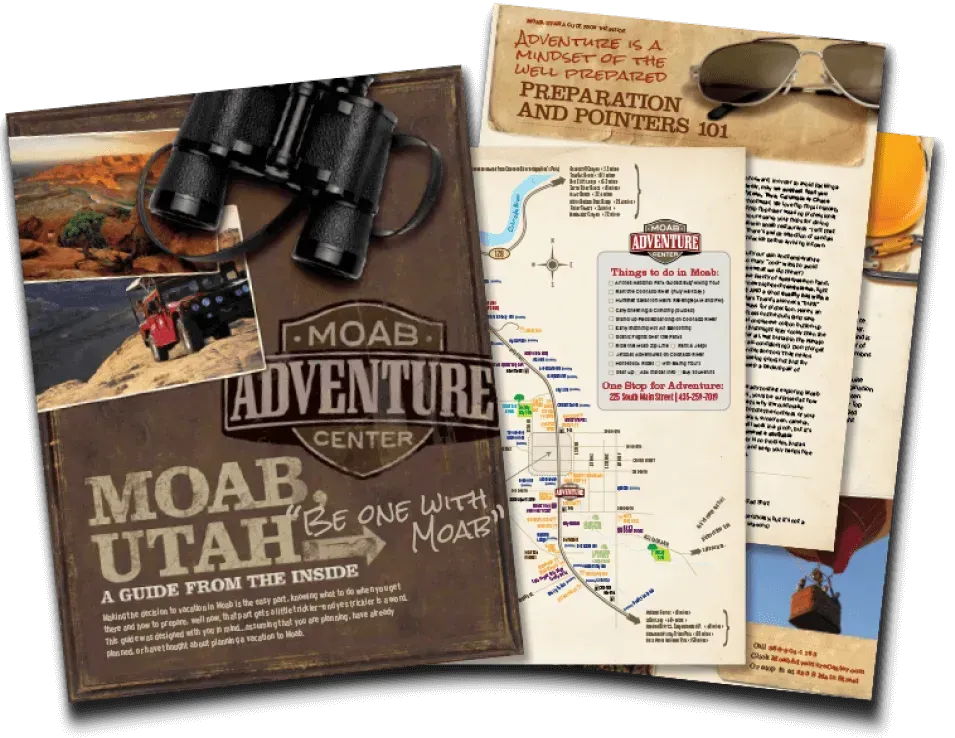

MOAB, UTAH

Fascinating Facts About Arches National Park
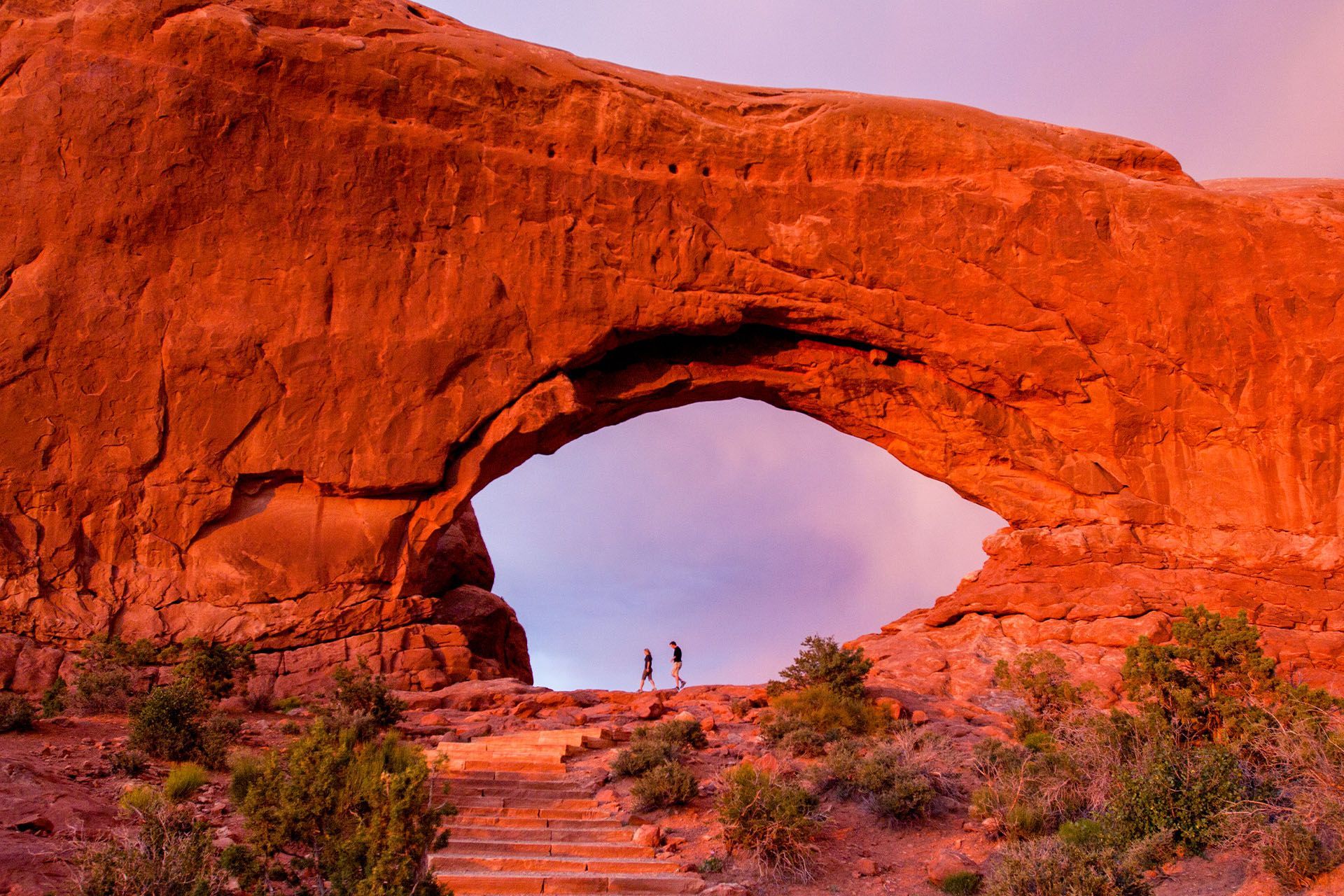
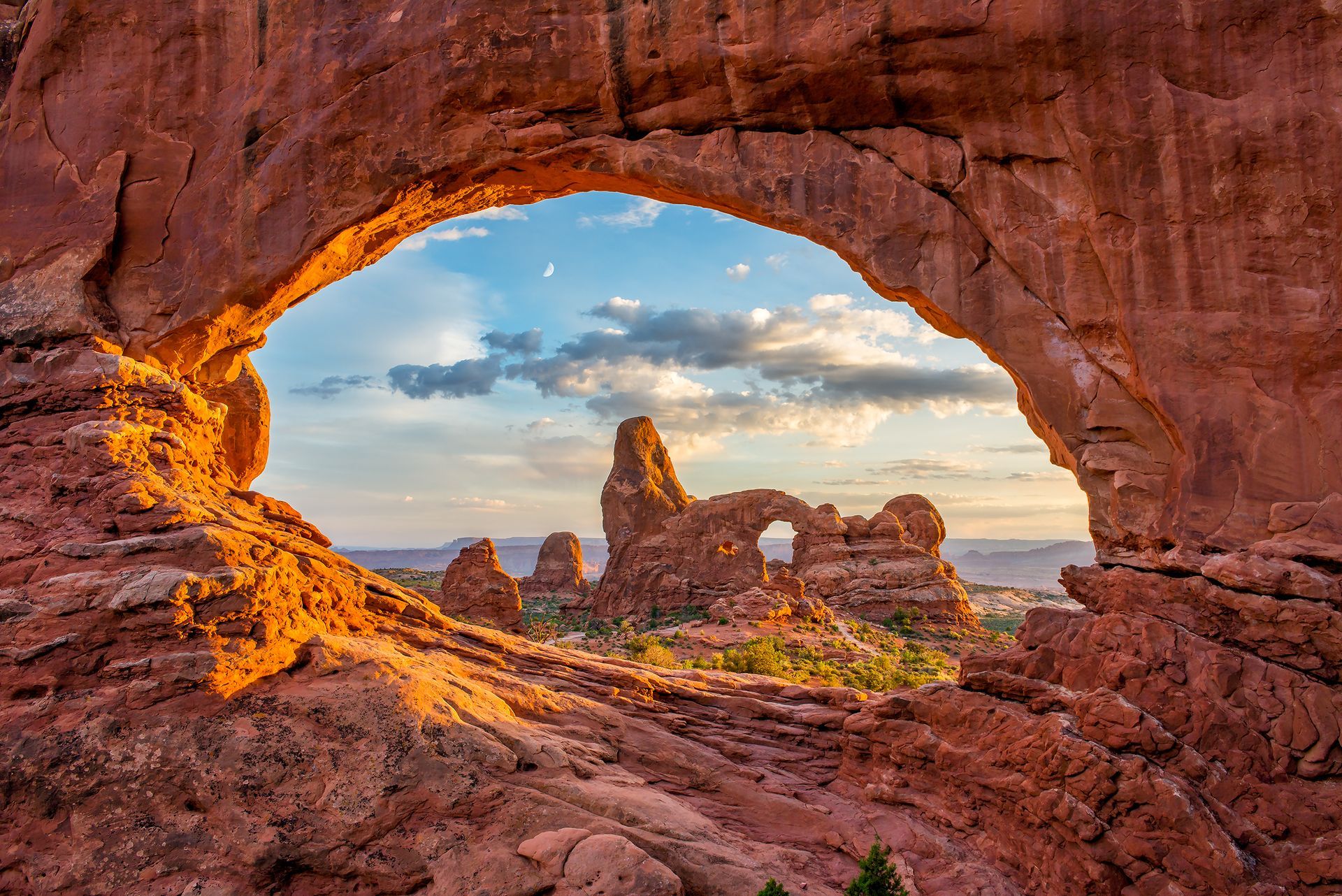
Arches National Park is more than a collection of stone arches. It’s a story millions of years in the making. These red rock formations rise from the desert like sculptures shaped by wind, water, and time itself. Here are some fun and fascinating facts about Arches National Park, from how its more than 2,000 natural arches formed to when it became a national park and why it continues to inspire awe in travelers from around the world. Whether you’re planning your first visit or returning to see your favorite formations, these interesting facts will help you see Arches in a whole new way.
Quick Facts
Location: Eastern Utah, just 5 miles north of Moab
Established: November 12, 1971 (originally a National Monument in 1929)
Park Size: About 76,679 acres (roughly 119 square miles)
Number of Natural Arches: Over 2,000 officially documented
Most Famous Arch: Delicate Arch — the park’s signature landmark and Utah’s state symbol
Elevation Range: 4,085 to 5,653 feet above sea level
Rock Type: Entrada Sandstone and Navajo Sandstone, shaped by wind and water over millions of years
Average Annual Visitors: More than 1.5 million. Avoid the parking stress on a
guided Arches tour

10 Fun Facts about Arches National Park
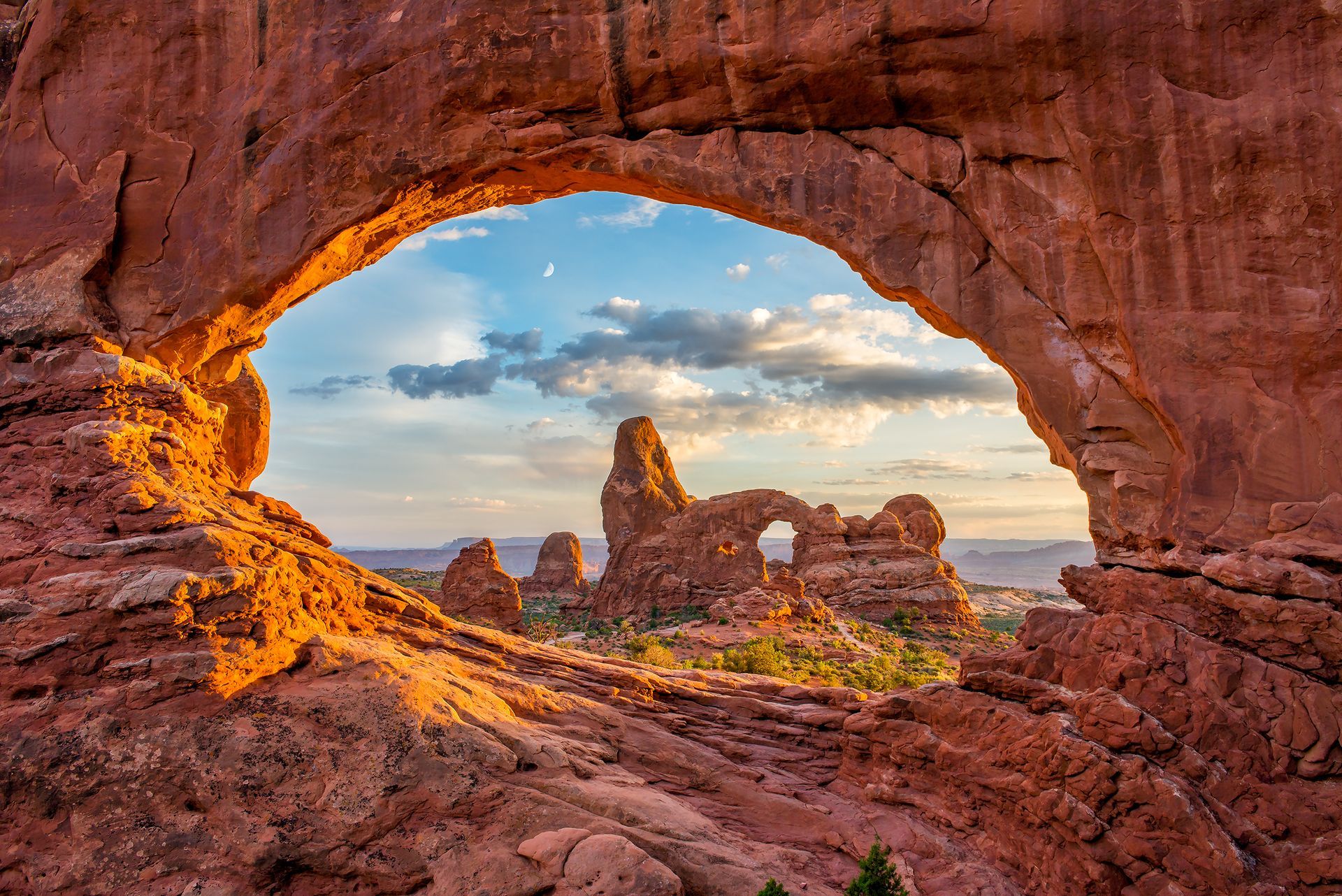
The World’s Greatest Concentration of Natural Arches
Arches National Park is home to more than
2,000 natural sandstone arches—the highest concentration anywhere on Earth. From tiny three-foot openings to massive spans longer than a football field, each one is a masterpiece millions of years in the making. Join one of our
guided Arches tours to see these formations up close, learn how they came to be, and discover viewpoints most visitors miss.
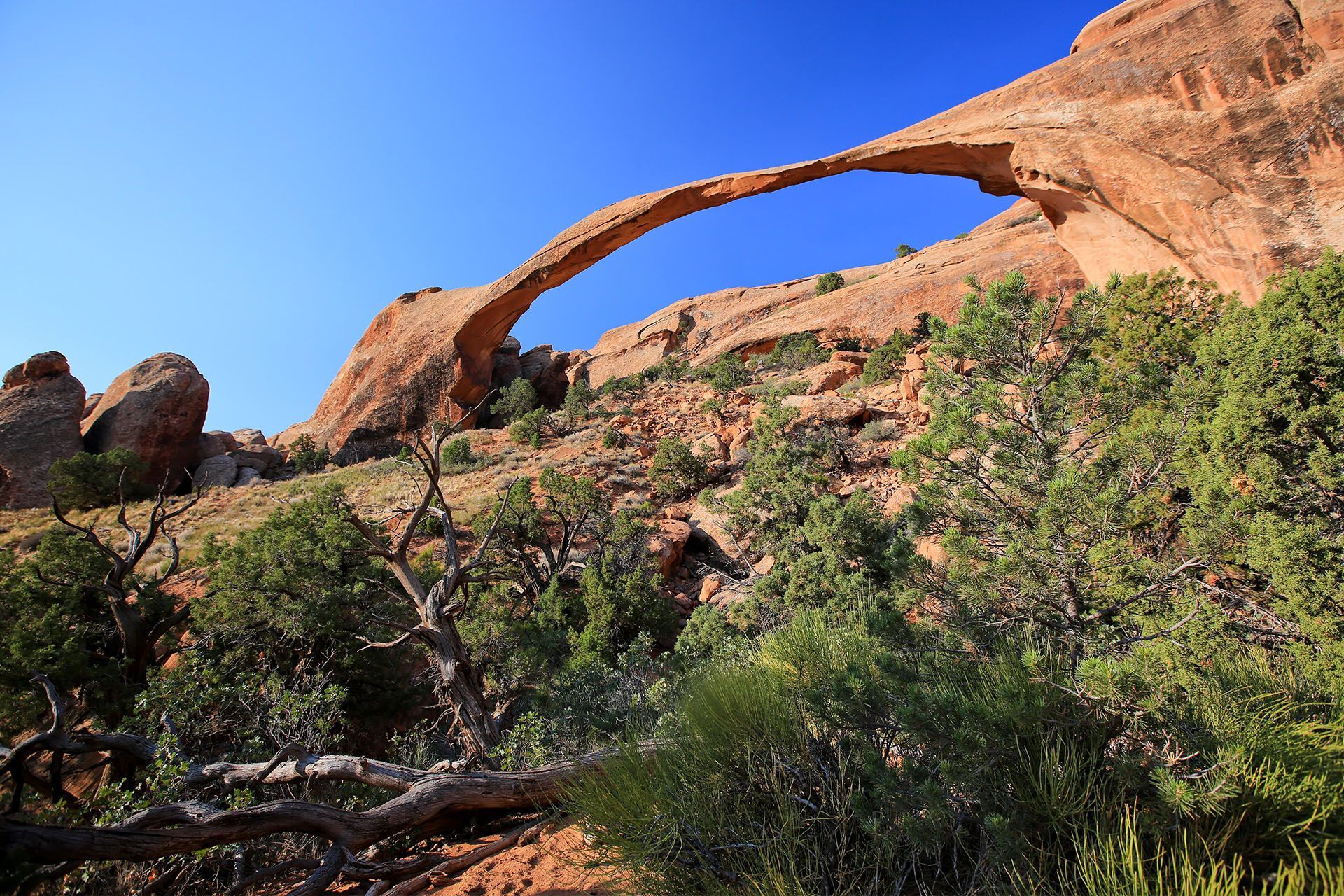
Landscape Arch Is Longer Than a Football Field
Spanning
306 feet (93 meters), Landscape Arch in Devils Garden is the longest in North America and the fourth longest in the world. The rock is so thin that pieces have fallen away in recent years—prompting park rangers to close the trail beneath it for safety. Of course, now you want to know where the longest arch is, don't you? It's "Fairy Bridge" in Guangxi, China and spans nearly 400 feet across. It was only discovered by explorers in the 2000's! But few places on Earth pack as many arches into one park as Moab.
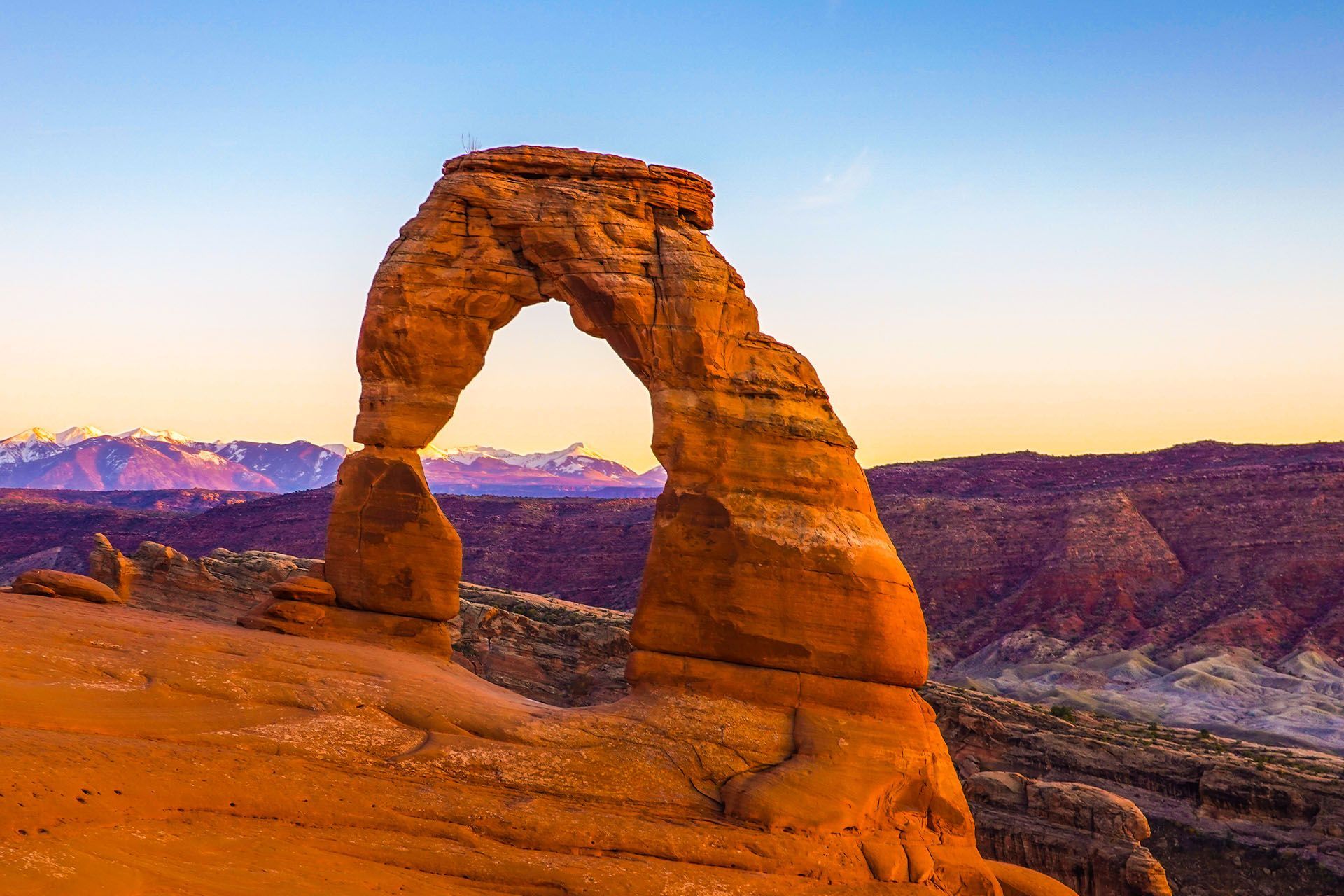
Delicate Arch: The Most Famous Arch in the World
Utah’s state icon,
Delicate Arch, rises about
52 feet (16 meters) tall—roughly the height of a five-story building—and stands alone atop a vast slickrock bowl, drawing visitors from around the world. Once part of a sandstone fin, it was sculpted into its freestanding shape by erosion. You’ll spot it on the Utah state license plate—and in photos from every corner of the globe that capture the unmistakable spirit of Moab.
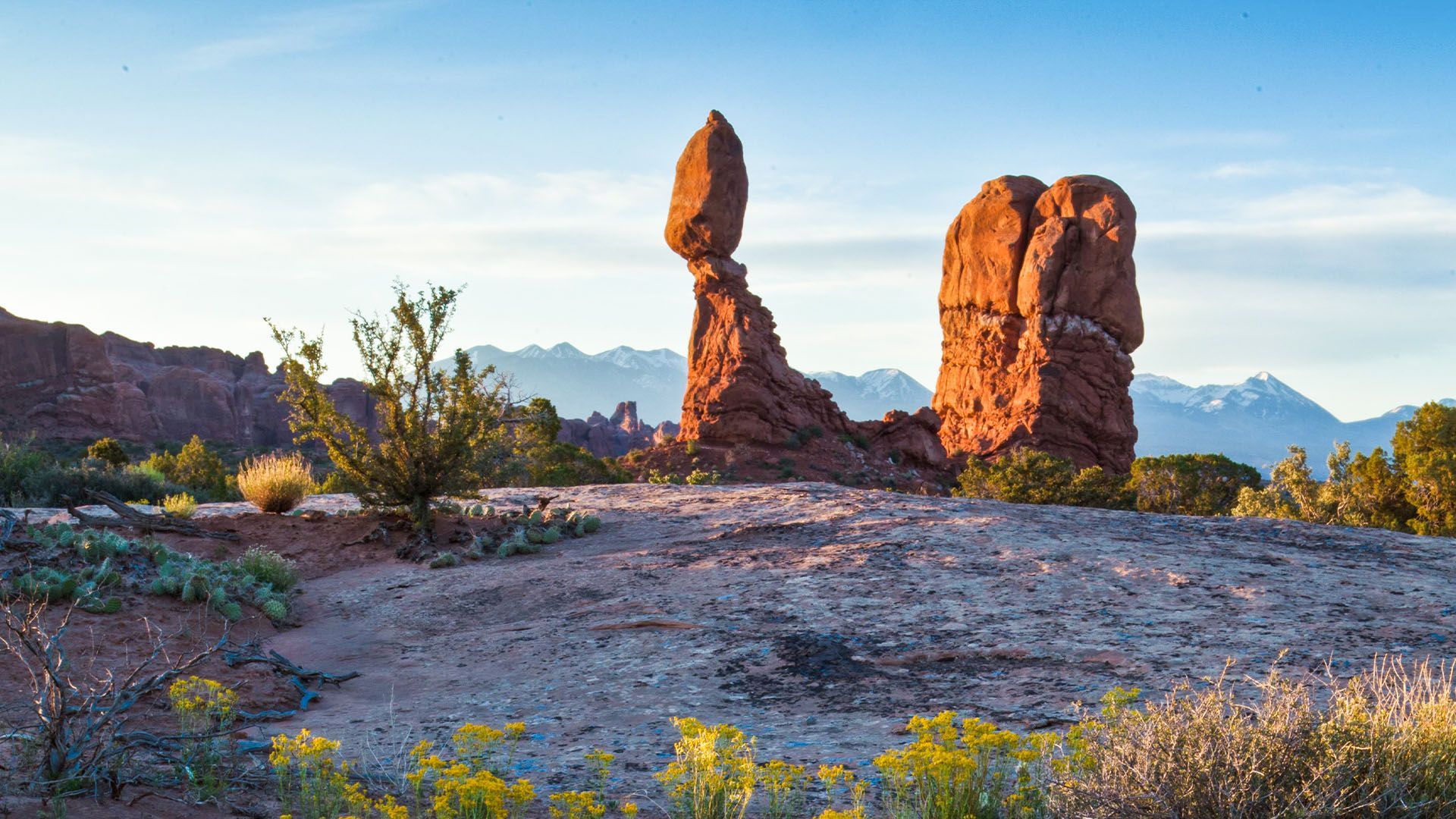
Balanced Rock Weighs More Than 25 Blue Whales
One of Arches’ most photographed features, the sandstone boulder atop
Balanced Rock is estimated to weigh around
3,577 tons. It’s held in place by a much smaller pedestal that’s slowly wearing away—a gravity-defying reminder that even rock eventually moves. And in case you’re wondering, a single blue whale can weigh up to
150 tons—meaning this one rock is as heavy as an entire pod of them, or about the same as
300 loaded school buses balanced on a single point.
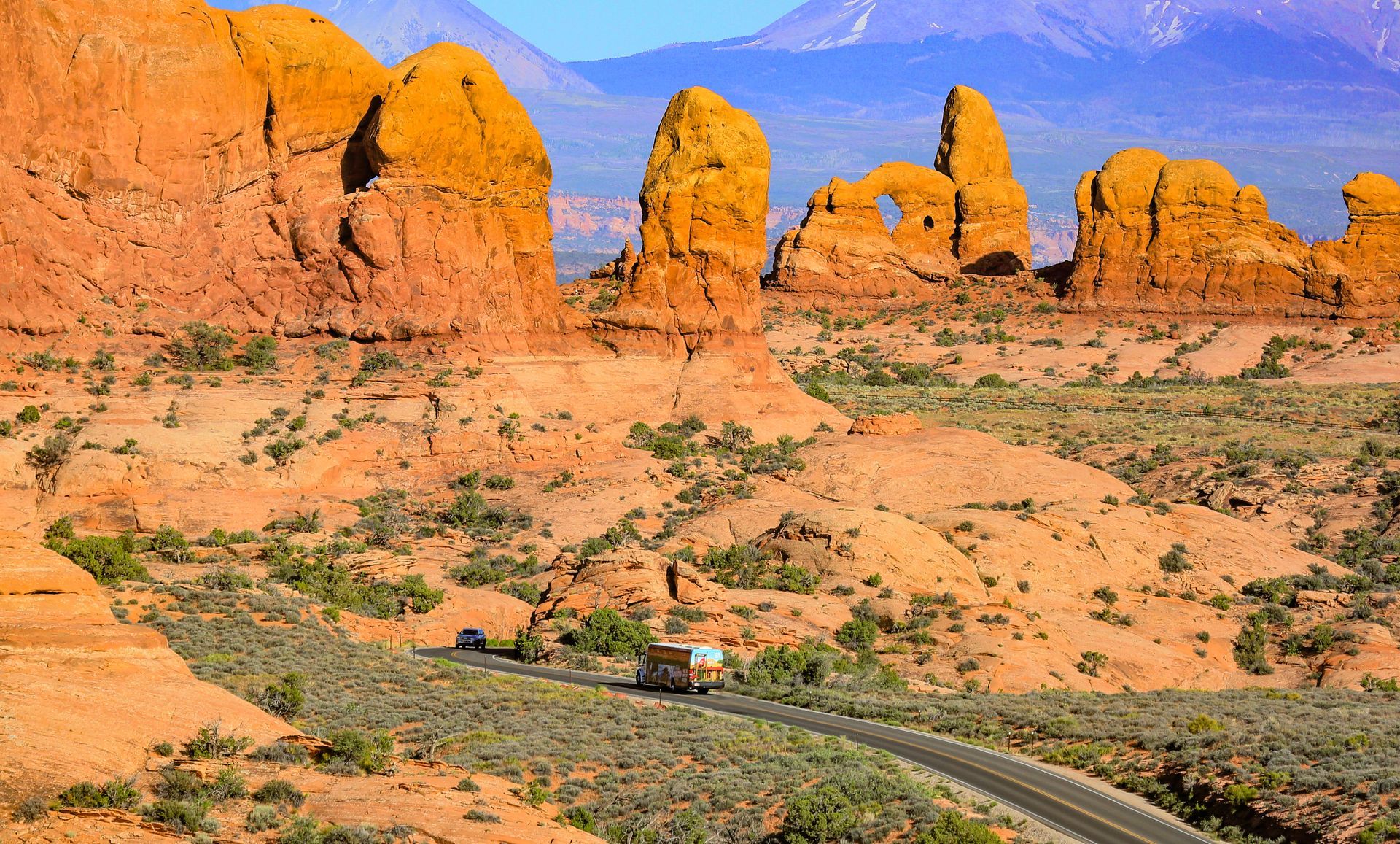
Arches National Park Has a “Salt Basement” Beneath It
Hidden below the desert surface is a
300-million-year-old salt bed, left behind by ancient seas. Over time, the salt shifted and buckled, cracking the sandstone above it. Without this unstable foundation, Arches’ incredible formations might never have existed. In other words, the park’s arches owe their beauty to a layer of ancient salt that’s still quietly reshaping the landscape—like a geologic waterbed under the desert.
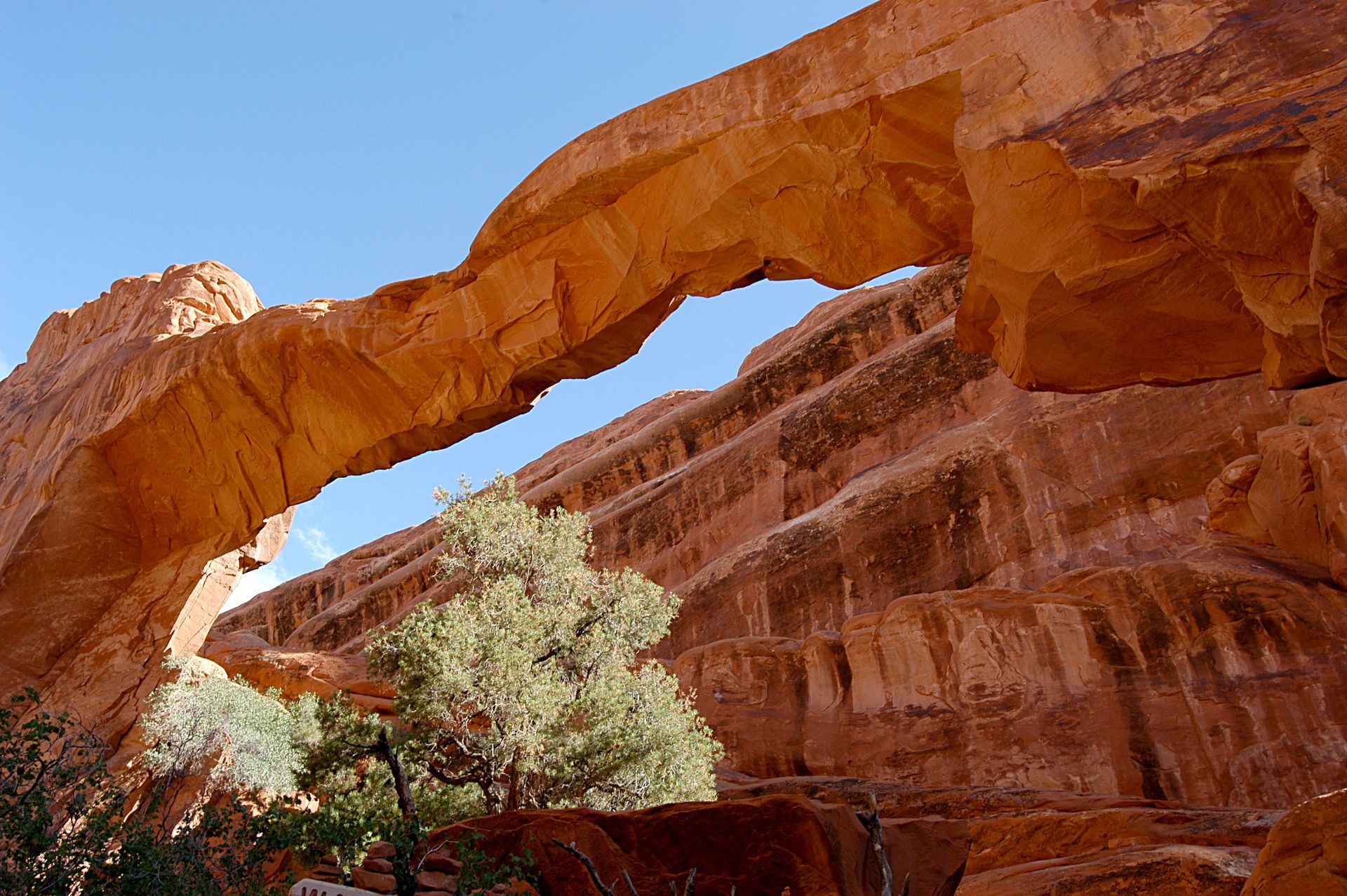
Arches Still Come and Go
Wind, rain, and temperature changes continue to shape the landscape every day. In
2008,
Wall Arch
collapsed overnight, stunning rangers and visitors alike. It wasn’t the first—Landscape Arch has lost large slabs in recent decades, and
Double Arch has shed fragments too. New arches will eventually form in their place, a living reminder that even stone is never still in the desert.

Hollywood Fell in Love with Arches
From classic westerns like Rio Conchos to blockbusters such as Thelma & Louise and Indiana Jones and the Last Crusade, more than a dozen movies have been filmed in or around Arches. The opening scene of
Indiana Jones and the Last Crusade, where young Indy discovers the Cross of Coronado, was filmed beneath
Double Arch—one of the park’s most striking formations. With its glowing red rock and otherworldly landscape, it’s no wonder Arches has become one of Hollywood’s favorite natural sets.
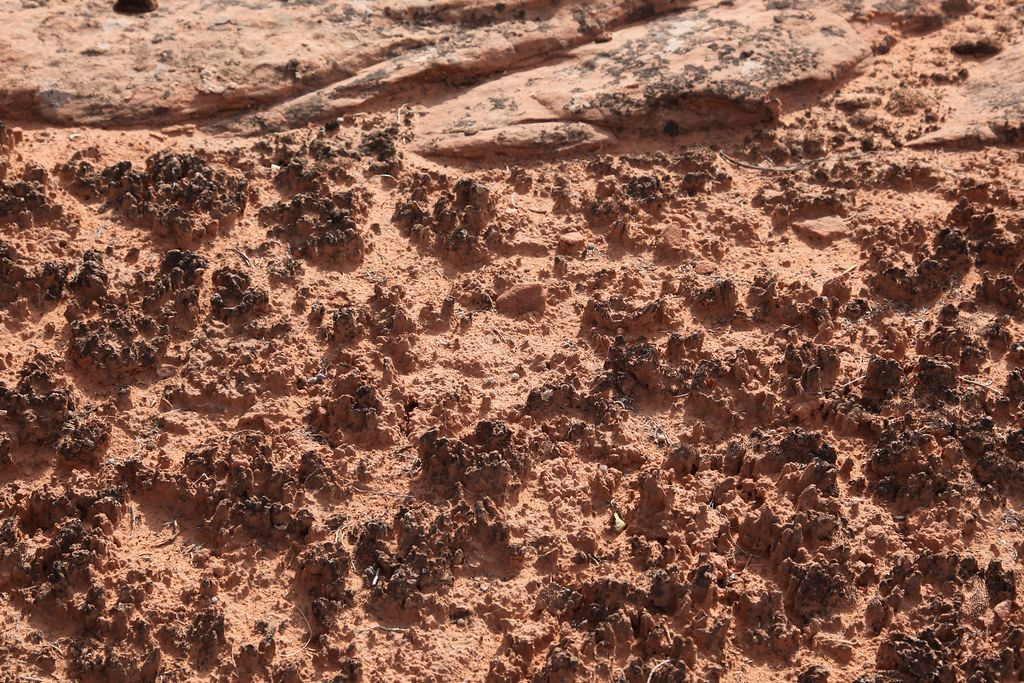
The Desert Is Alive Beneath Your Feet
Look closely and you’ll notice a dark, crusty layer on the ground—it’s a living community of microbes, mosses, and lichens that helps the desert survive. This
“biological soil crust” traps moisture and prevents erosion, making it essential to life in Arches. It’s also incredibly fragile—a single footprint can destroy decades of growth—so staying on the trail protects the park’s living skin.
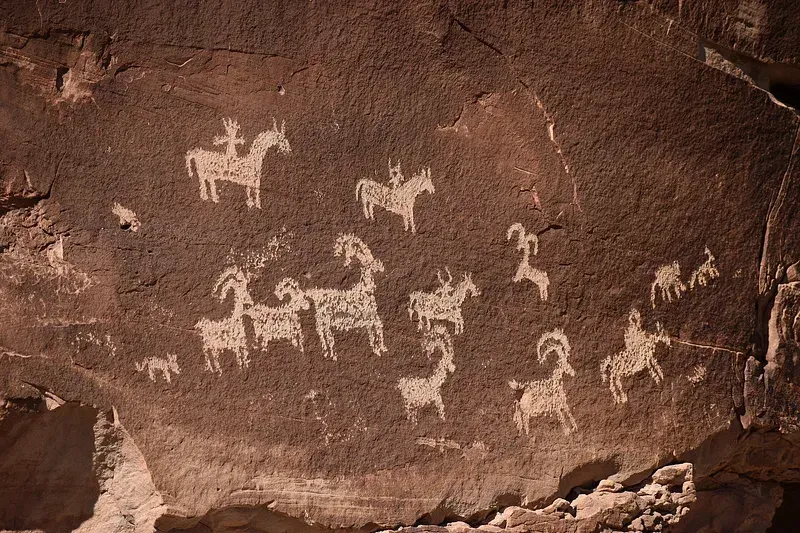
Ancient People Left Their Mark Here
Petroglyphs near
Wolfe Ranch tell stories from the
Ute and Ancestral Puebloan peoples who once lived and hunted here. Their carvings, etched hundreds of years ago, offer a timeless link between the park’s human and geological history. If you look closely, you might even spot a few modern scratches locals jokingly call
“Bubba glyphs”—unfortunate reminders that carving on rock destroys irreplaceable history. The best way to honor those who came before us is to admire, not alter, their work.
Arches Almost Had a Different Name
When the area was first proposed for protection, early officials considered names like
“The Windows National Monument” and
“Devil’s Garden National Monument.” It wasn’t until the 1930s that the simpler name
“Arches” was chosen—honoring the features that make it unlike any other place on Earth. Join one of our
Guided Arches National Park Tours to uncover these facts and stories, and so many more, that will give you an even greater appreciation of this magical park.
Let's Explore Arches National Park
- Tours in Arches National Park
- About Arches National Park
- Timed-Entry Tickets & Reservations
- Driving Through Arches National Park
- Best Time to Visit Arches
- Arches National Park Weather
- Camping in Arches National Park
- Lodging Near Arches
- Best Hikes in Arches
- Delicate Arch
- Pictures of Arches National Park
- How are Arches Formed
- Arches National Park Map
See the Arches Come Alive
Reading about Arches is one thing—standing beneath them is something else entirely. Our guided tours reveal the park’s hidden stories, show you the best viewpoints at the perfect times of day, and take care of every detail so you can simply take it all in. Whether you join a morning tour and hike, a scenic sunset drive and guided tour, or a spectacular flight over the red rock, you’ll experience Arches in a way you’ll never forget.
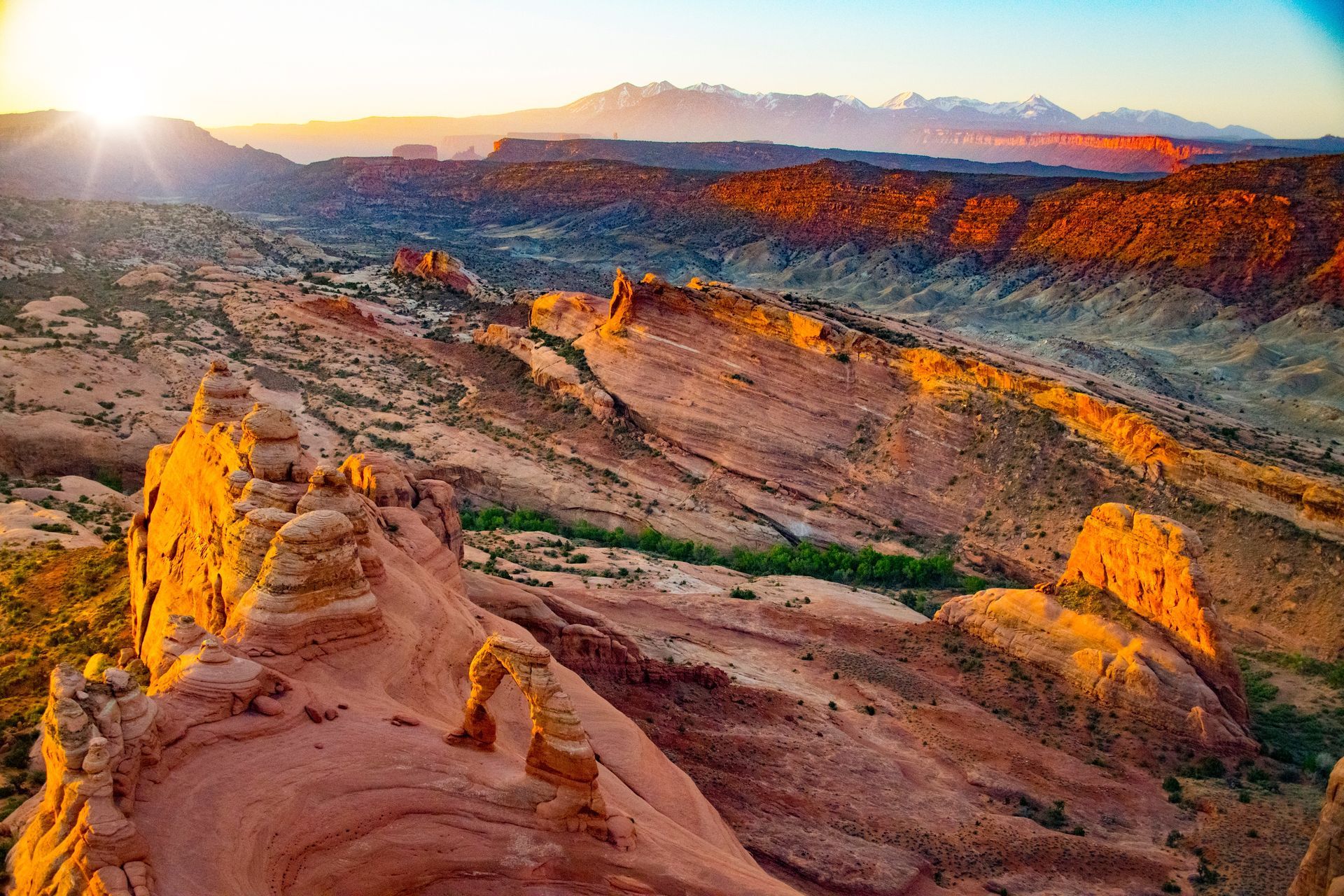
Soar above Arches in a scenic flight that reveals its hidden formations, sweeping vistas, and jaw-dropping beauty, all without the heat, crowds, or hiking.
- Duration: ~30 minutes
- Departures: 9am to 2pm
- Season: Year Round
ADULTS 13+
$228
YOUTH 3-12
$228
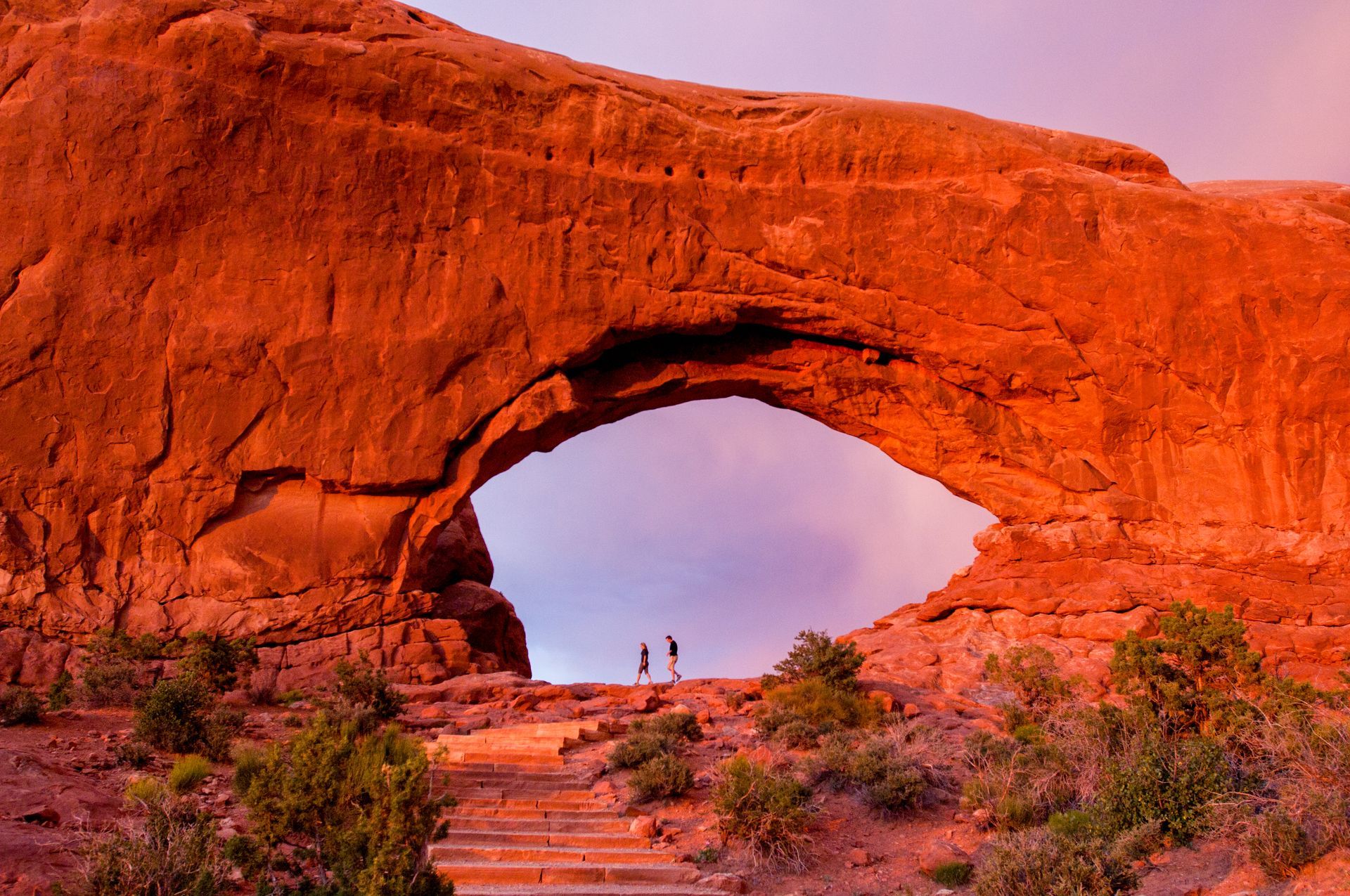
Witness Arches at its most magical: Golden hour light, fewer crowds, and fascinating stories shared by guides who bring the landscape to life.
- Duration: ~4.5 hrs
- Departures: Evening
- Season: Year Round
ADULTS 13+
$135
YOUTH 5-12
$115
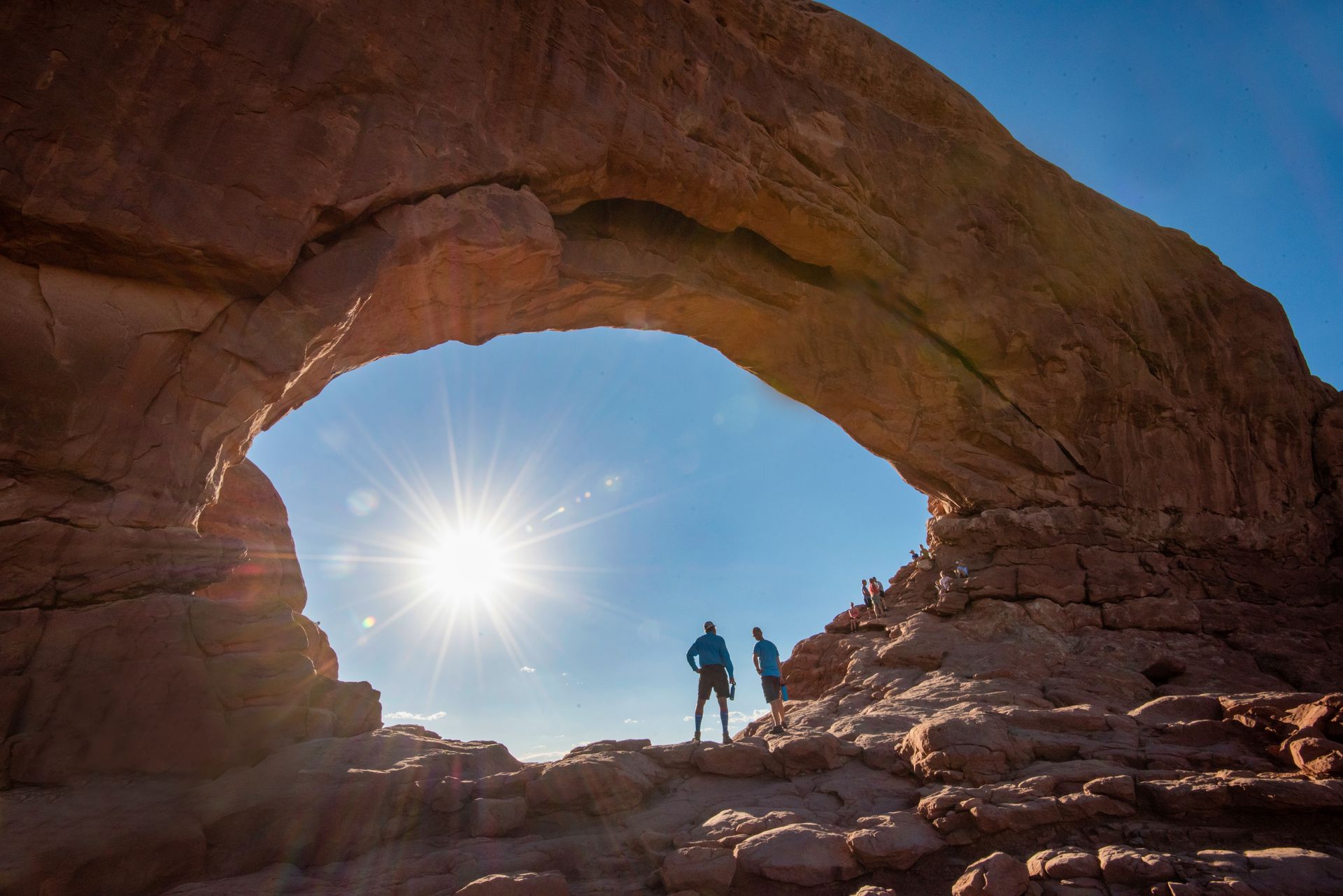
VIP access to Arches National Park: Expert guides, iconic sights, & mantle-worthy family photos without the hassle of parking or missing key sights.
- Duration: ~4 hrs
- Departures: Morning
- Season: Year Round
ADULTS 13+
$125
YOUTH 5-12
$105
How Much Do You Know about Arches? 20 More Facts to Test Your Knowledge
How big is Arches National Park?
Arches covers 76,679 acres—that’s about 119 square miles of red rock wonderland. The main park road winds for 18 miles from the entrance to the end of the pavement at Devils Garden, where some of the most impressive arches await.
When did Arches become a national park?
Arches first gained protection in 1929, when President Herbert Hoover established it as a National Monument. In 1971, Congress redesignated it as a National Park under President Richard Nixon—ensuring these formations would be preserved for generations.
How many arches are there in Arches National Park?
There are more than 2,000 natural sandstone arches officially recorded in the park, though new ones form—and old ones sometimes collapse—every few decades.
What kinds of arches will I see in the park?
You’ll spot a surprising variety: free-standing arches like Delicate Arch, cliff-wall arches that remain part of larger rock formations, pothole arches shaped by trapped rainwater, and even natural bridges carved by ancient streams.
What is the biggest arch in Arches National Park?
That title goes to Landscape Arch in Devils Garden, which stretches an incredible 306 feet (93 meters)—longer than a football field. It’s the longest arch in North America and the fourth longest in the world.
Do arches ever fall?
Yes—though rarely on a human timeline. Erosion is constant in the desert. The most famous recent collapse happened in 2008, when Wall Arch fell overnight. It’s a reminder that even rock formations are temporary works of art.
What makes Arches’ soil “alive”?
The desert floor is covered with a dark, bumpy layer called biological soil crust—a living community of cyanobacteria, moss, and lichen that holds the soil together and helps plants survive in this harsh environment.
How much rain does Arches get each year?
Arches averages only about 8 to 10 inches of rain annually, but when storms hit, they can unleash powerful flash floods that reshape the landscape in a matter of minutes.
Who were the first people to live in the area?
Human occupation is estimated back to 10,000 B.C. with the Desert Archaic people, through hunting groups of the ancestral puebloan and Fremont Indian, from 2000 B.C. to 1200’s.
What animals can you see in Arches National Park?
Keep your eyes open for bighorn sheep, lizards, ravens, and red-tailed hawks. More than 200 bird species have been spotted here, along with foxes, jackrabbits, and an occasional black bear wandering through.
Are there endangered species in the park?
Yes. The Southwestern willow flycatcher is one of several endangered or “species of special concern” that make their home here. Protecting the park’s fragile ecosystem helps ensure these rare species continue to thrive.
What is the most famous arch in the world?
The most famous natural stone arch in the world is Delicate Arch! Known from photos, this arch has become iconic due to its freestanding shape. You'll see it featured on one popular variation of the Utah license plate.
How much does the "Balanced Rock" weigh?
The enormous sandstone boulder atop Balanced Rock is presumed to weigh approximately 3,577 tons!
What is the tallest opening to an arch?
You can find the tallest opening to an arch in The Windows Area of the park - Double Arch at 112 feet.
What does it take for an arch to be considered an arch?
An opening with 3 feet in any direction is considered an arch.
How many people visit Arches National Park each year?
Arches National Park receives about 1.48 million visitors per year, with recent years hovering just over 1.5 million.
How many types of plants exist in Arches National Park?
There are 745 species of flora in Arches National park. Hundreds of types of grasses, cacti, evergreens, deciduous trees, flowers, and bushes have adapted to surviving the harsh conditions in the park.
Who is the most famous person associated with Arches National Park?
Possibly Indiana Jones, but in real life, Edward Abbey, a monument employee in the 1960’s. His diary, Desert Solitaire, depicts stories of The Monument and attracted generations to Arches National Park.
How many movies were filmed in Arches?
Over 11 films have used a scene from Arches National Park. From iconic westerns such as Rio Conchos, to blockbusters such as Indiana Jones and the Last Crusade, and Thelma and Louise.
Why is the rock in Arches so red?
The deep red hue comes from iron oxide, or rust, that coats the sandstone grains. Over millions of years, exposure to air and water turned the desert floor into a natural palette of reds, oranges, and purples—especially vibrant at sunrise and sunset.
Not finding what you're looking for?
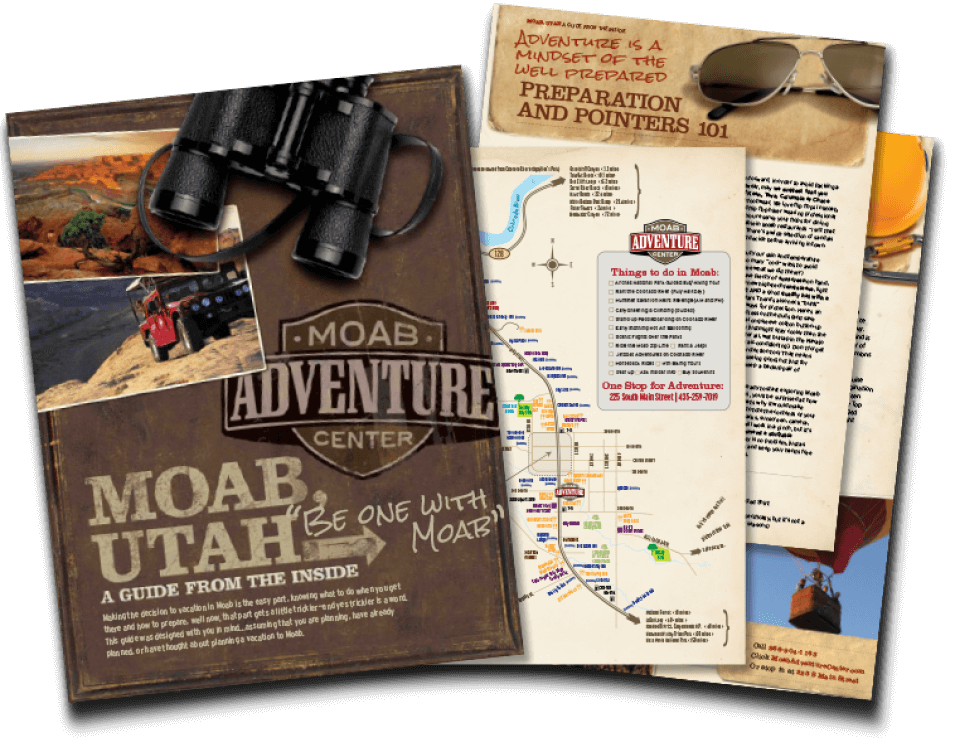
GET THE FREE MOAB INSIDER'S GUIDE!
Join our Moab Insider Email Series
and get our free Moab Insider's Guide
. It's your shortcut to where to stay, can't-miss adventures, recommended restaurants, hidden gems, and how to make the most of Arches & Canyonlands. Real local tips, easy itineraries, and expert advice so you can plan less and experience more
.
BECOME A MOAB INSIDER
With our Moab Insider's Guide and email series, you'll get local tips on the best dishes at restaurants, hidden adventures that most people miss, tips on when to visit, and a few more secrets on the side. Get all the essentials for the perfect Moab experience.
Free. Instant download. Unsubscribe anytime.
⭐️⭐️⭐️⭐️⭐️ 7,000+ 5-Star Reviews | 22-Time Best of State Winner